The Craft of Edo Hyogu (mounting), Passed Down for Over 120 Years
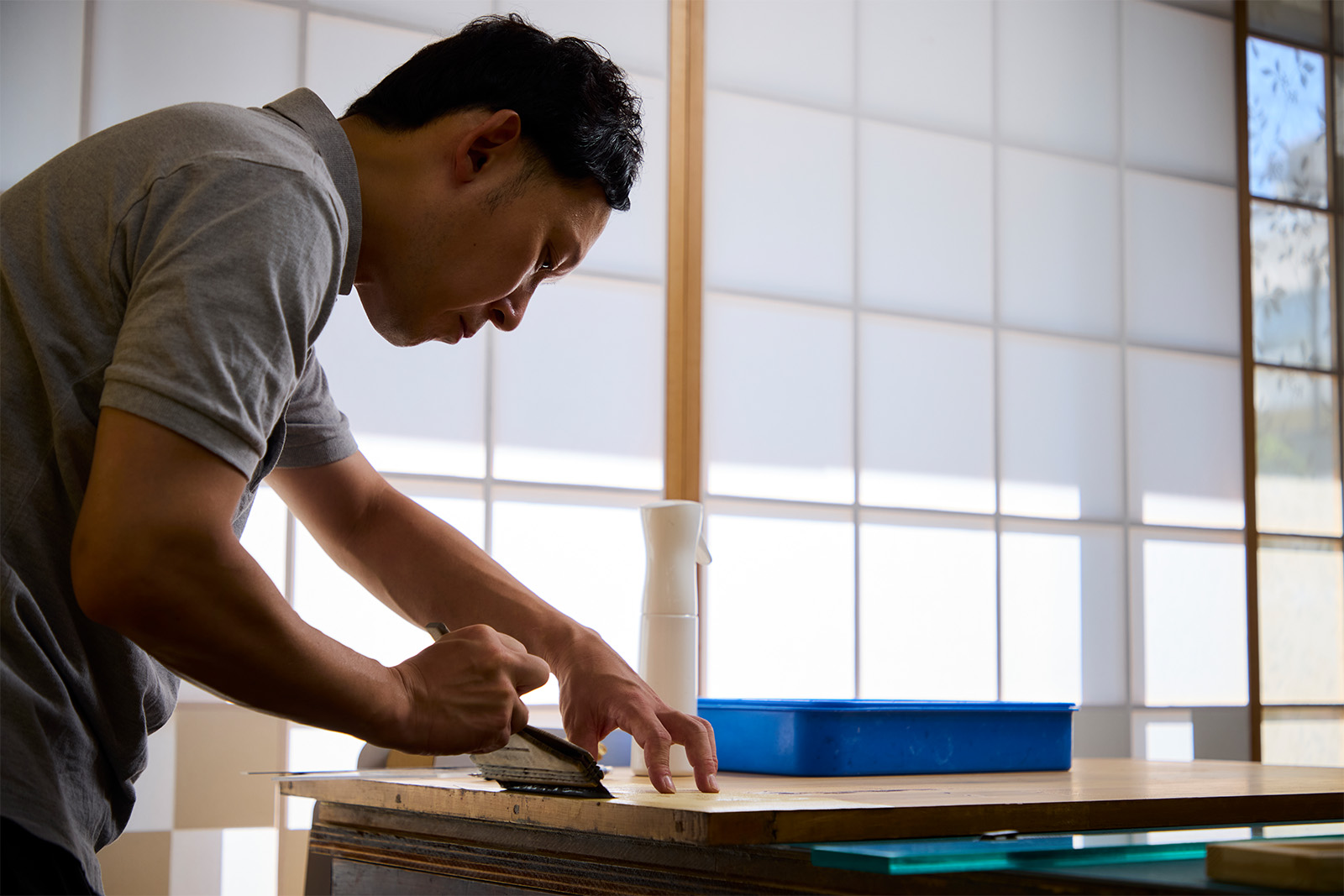
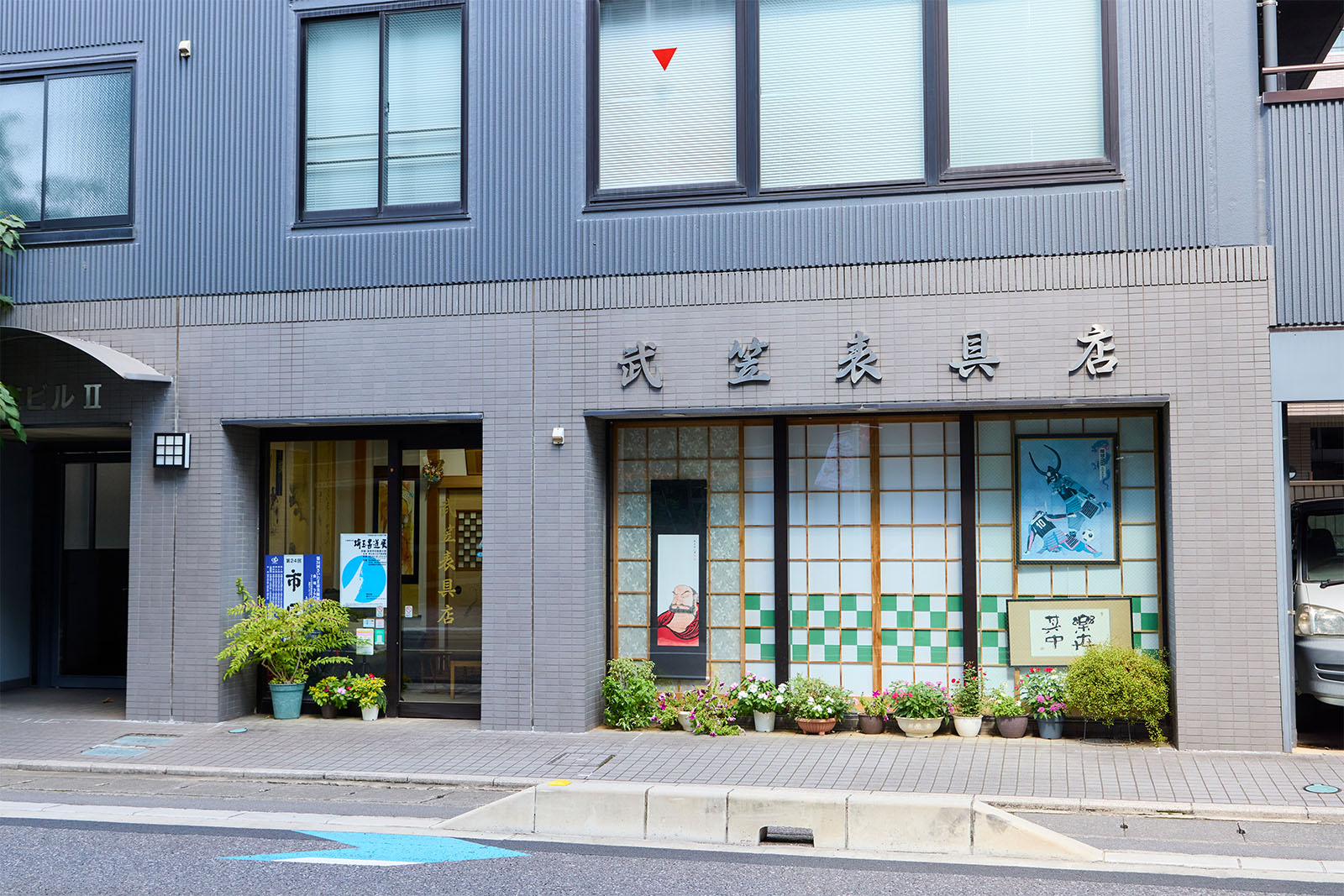
Mukasa Hyouguten LLC was founded in 1898 by Mr. Harukichi Mukasa. For four generations, the family has passed down the techniques of Hyogu in Urawa-ku, Saitama City. Today, Mr. Atsushi Mukasa, the fourth-generation artisan, carries on the business, working on everything from Shoji screens and Fusuma sliding doors to the creation and restoration of hanging scrolls, folding screens, and framed works, as well as mounting works by calligraphers and supporting calligraphy exhibitions. The work also involves reviving pieces handed down from the past and preserving works of calligraphy and art in beautiful condition for future generations, helping to safeguard and pass on Japan’s traditional culture.
Edo Hyogu took shape when Hyogu artisans moved from Kyoto to Edo following the establishment of the Edo shogunate. It then developed in its own distinctive way to suit Edo’s climate and culture. While Kyoto Hyogu is characterized by “Miyabi”, the ornate and courtly elegance, rooted in aristocratic culture, Edo Hyogu reflects “Iki”—the refined aesthetic born from the culture of Edo townspeople. Subtle regional differences remain in everything from the shapes of the tools to the dimensions used in mounting.
Mukasa Hyouguten, which preserves the techniques of Edo Hyogu, does more than simply preserve tradition unchanged. The shop incorporates fresh ideas into colors, materials, and design, with an eye to creating mountings that blend naturally into contemporary living spaces. This approach—using time-honored skills to create pieces suited to contemporary life—also carries forward the Edo spirit of “Iki”.
Choose a Character That Speaks to You and Colors That Complement the Calligraphy
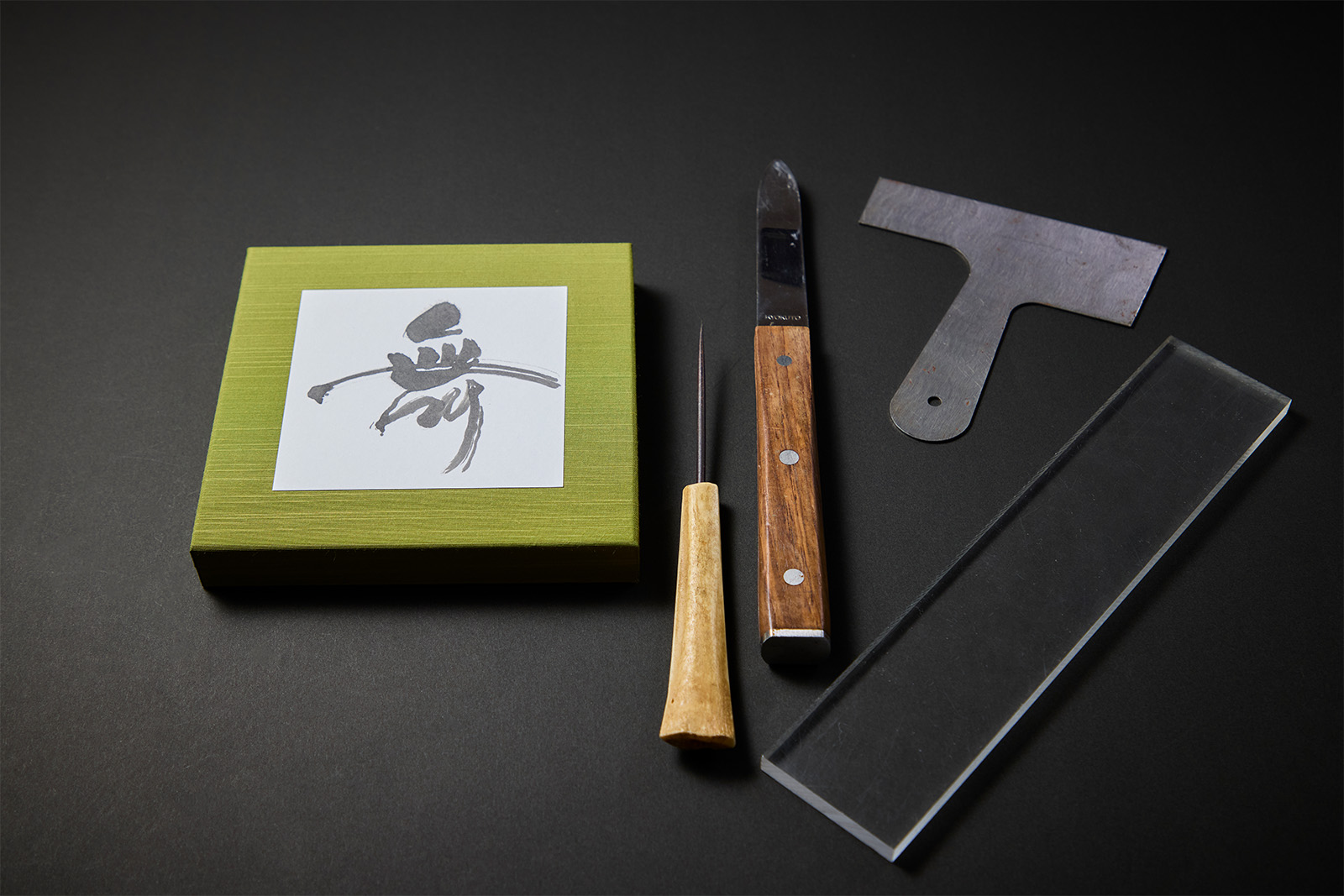
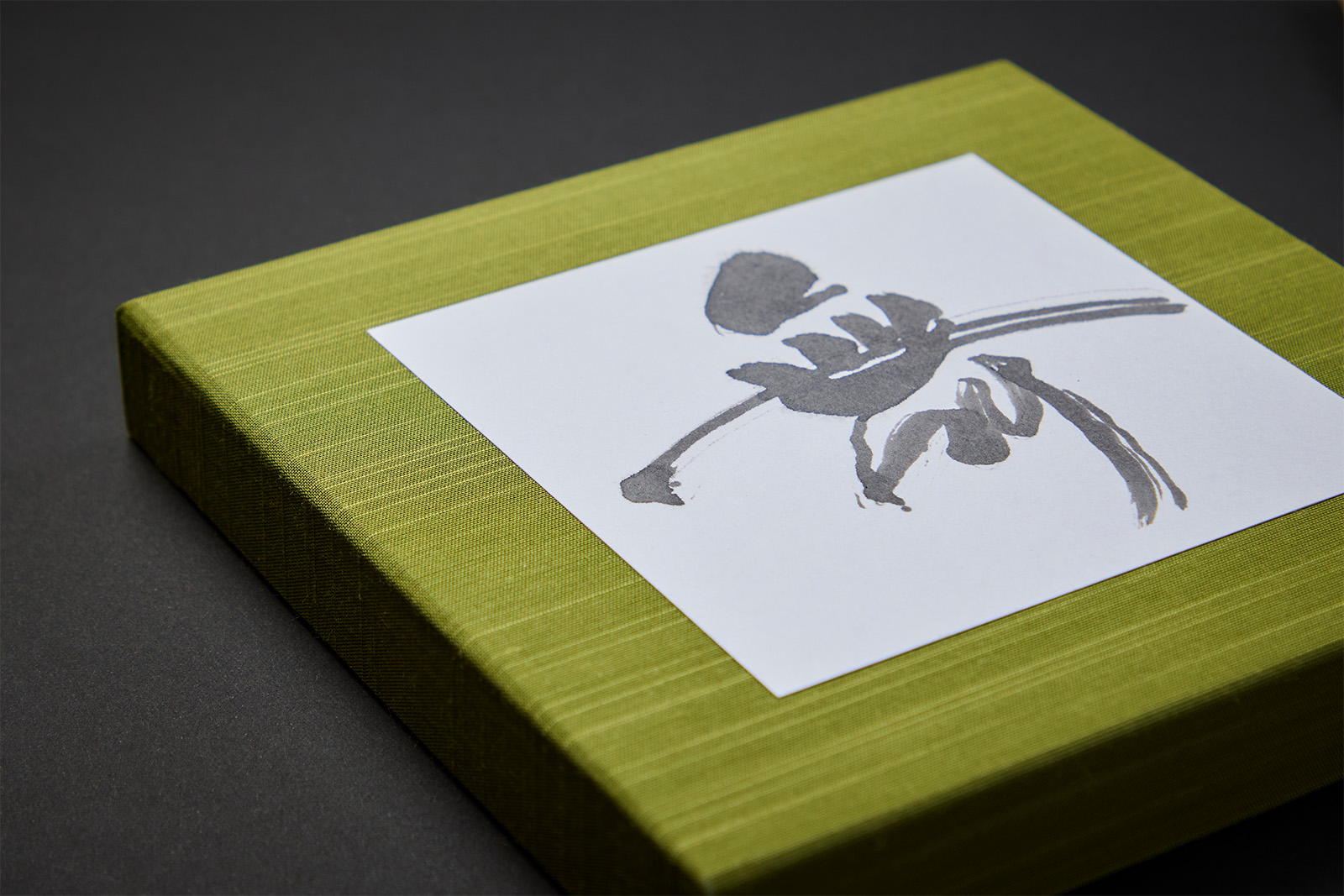
In this workshop, you’ll create a wooden art panel with a work of calligraphy as its centerpiece.
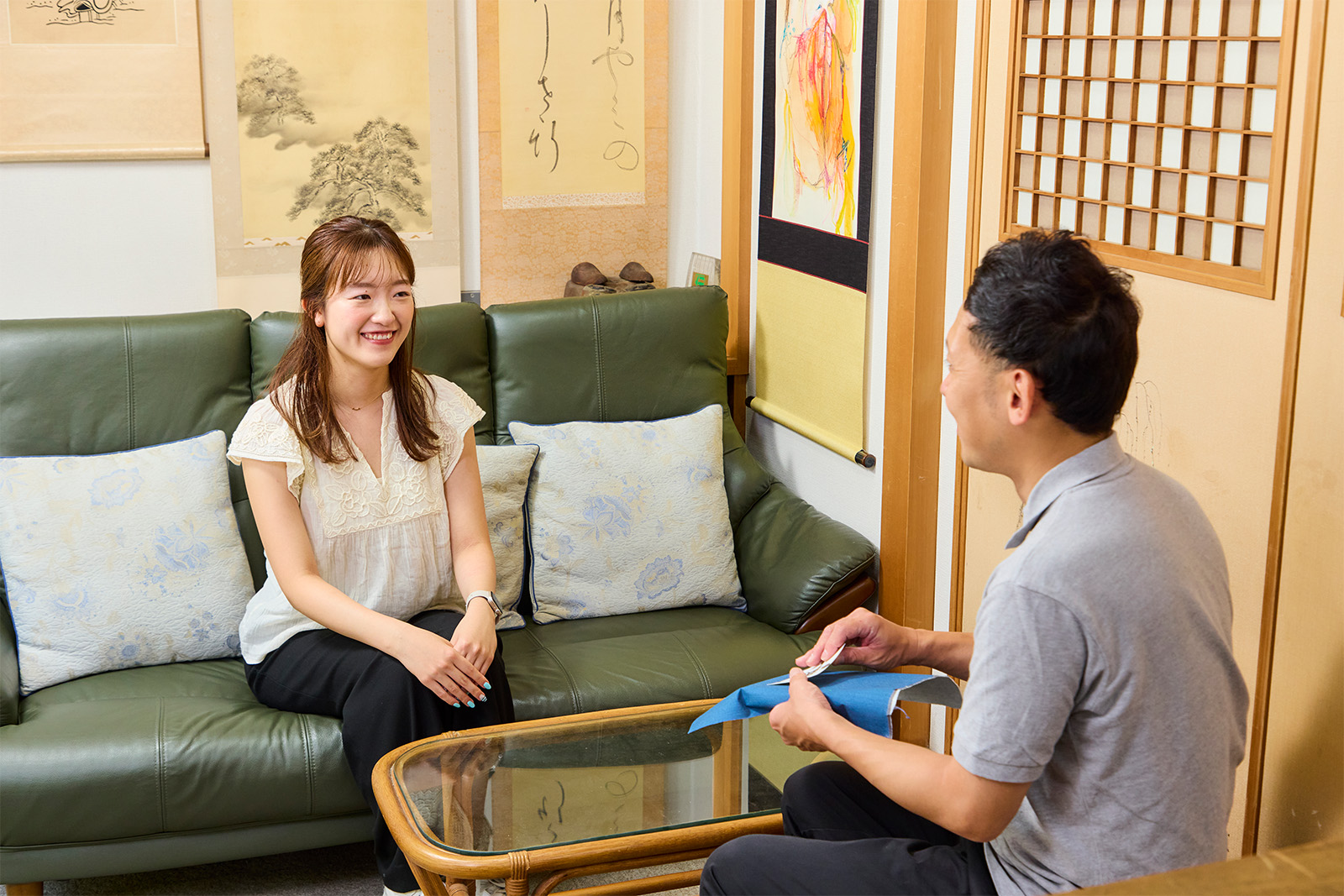
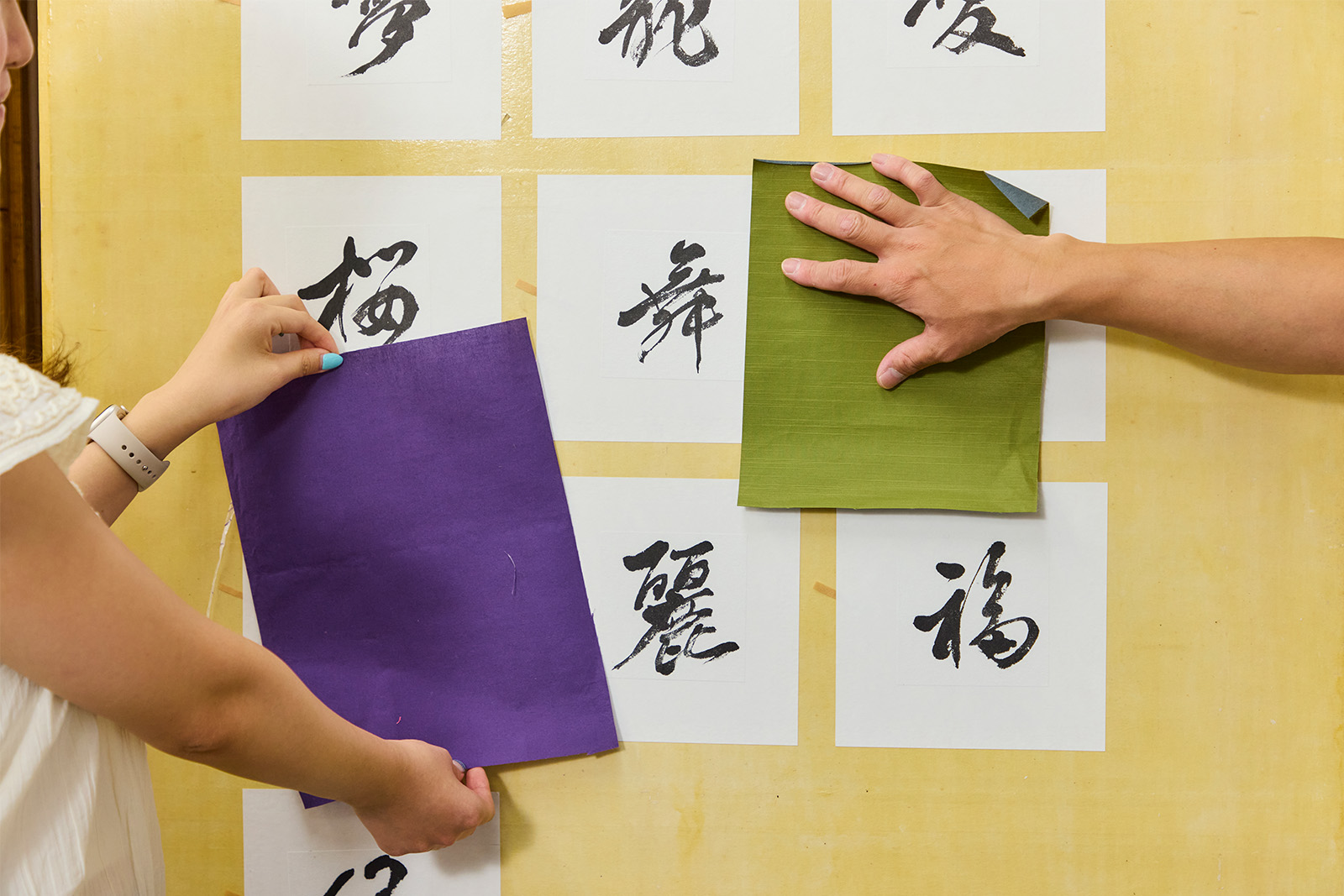
First of all, choose the calligraphy piece that speaks to you from the selection provided. Each Kanji character has its own meaning and can evoke a variety of impressions. Learn the meaning behind each character and look for one that reflects what matters to you or your hopes for the future.
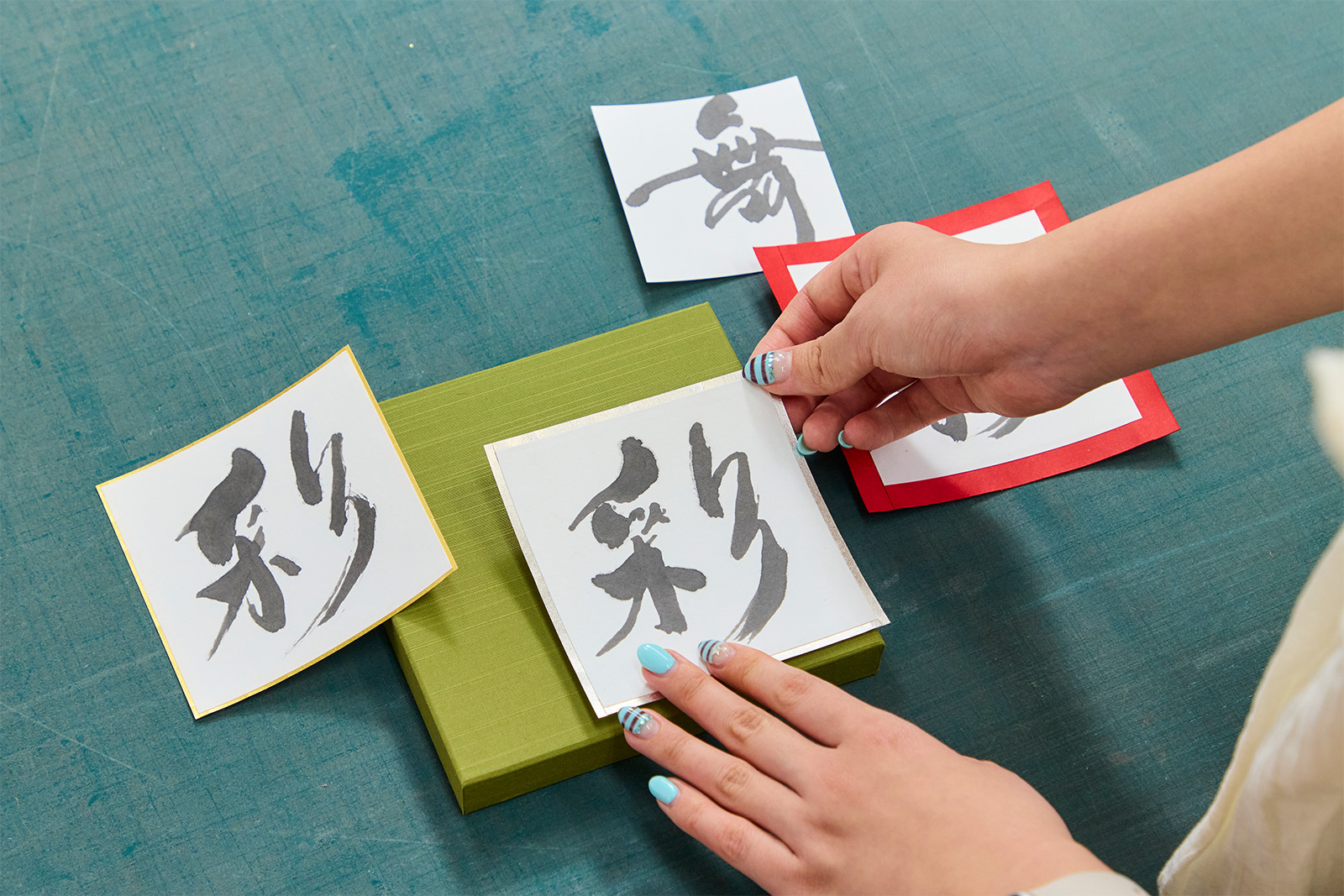
Once you’ve picked up the calligraphy, select a background material from the colorful Kireji textiles and Washi paper used in Hyogu. “What color would complement this character?” “What material would best bring out the feel of the calligraphy?” This is a chance to find out the combination that best brings out the calligraphy, considering not only your personal preferences but also how well the materials harmonize with the work itself.
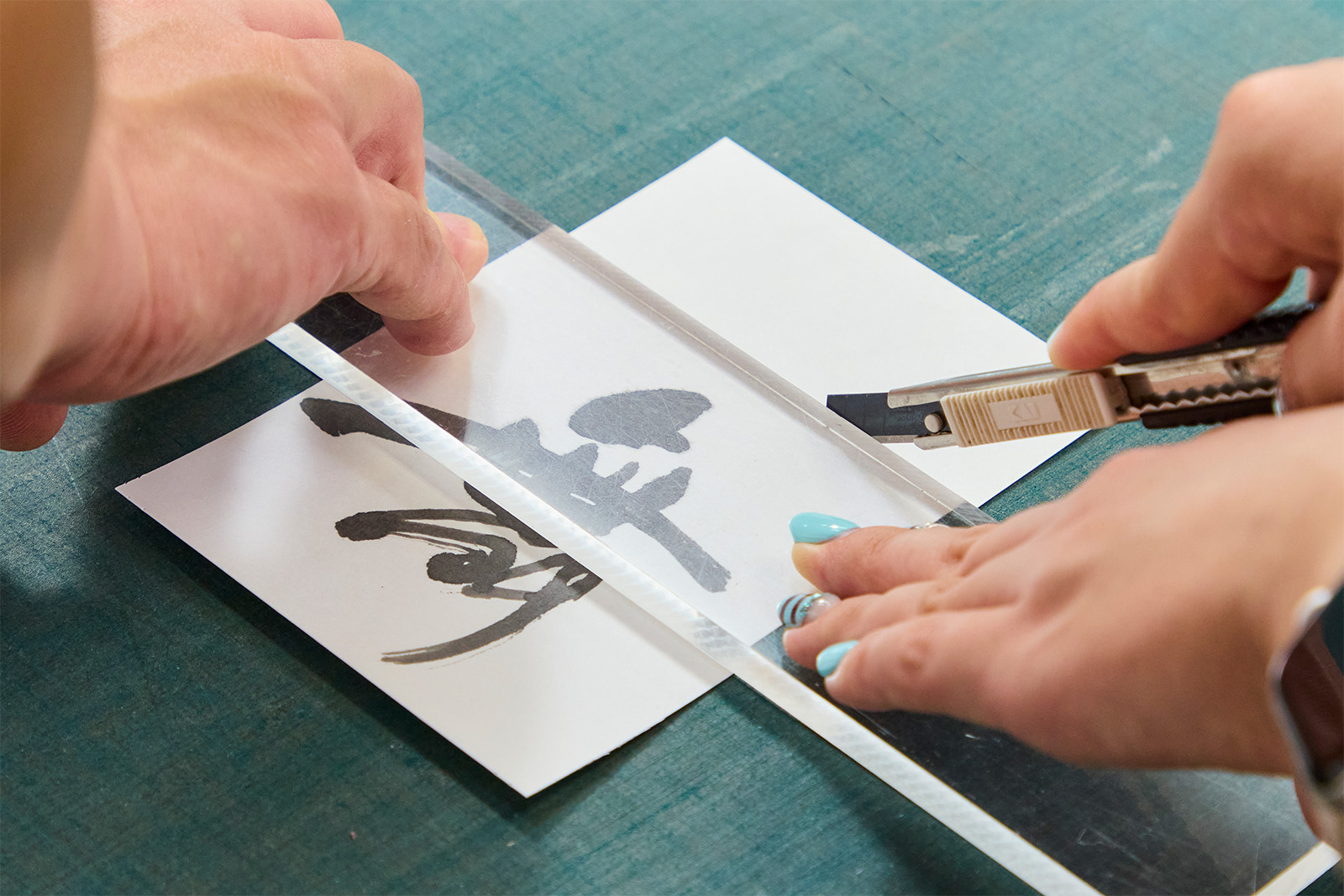
The overall impression can also change dramatically depending on how the calligraphy is trimmed and positioned. Leaving wide margins or cropping it close to the character? Placing it in the center or intentionally shift it to one side? Work with the artisan to decide how you would like to present the piece.
Cut the Kireji and Washi paper and Mount It onto the Panel with an Artisan’s Touch
With the design decided, it’s time to try the techniques of Hyogu for yourself.
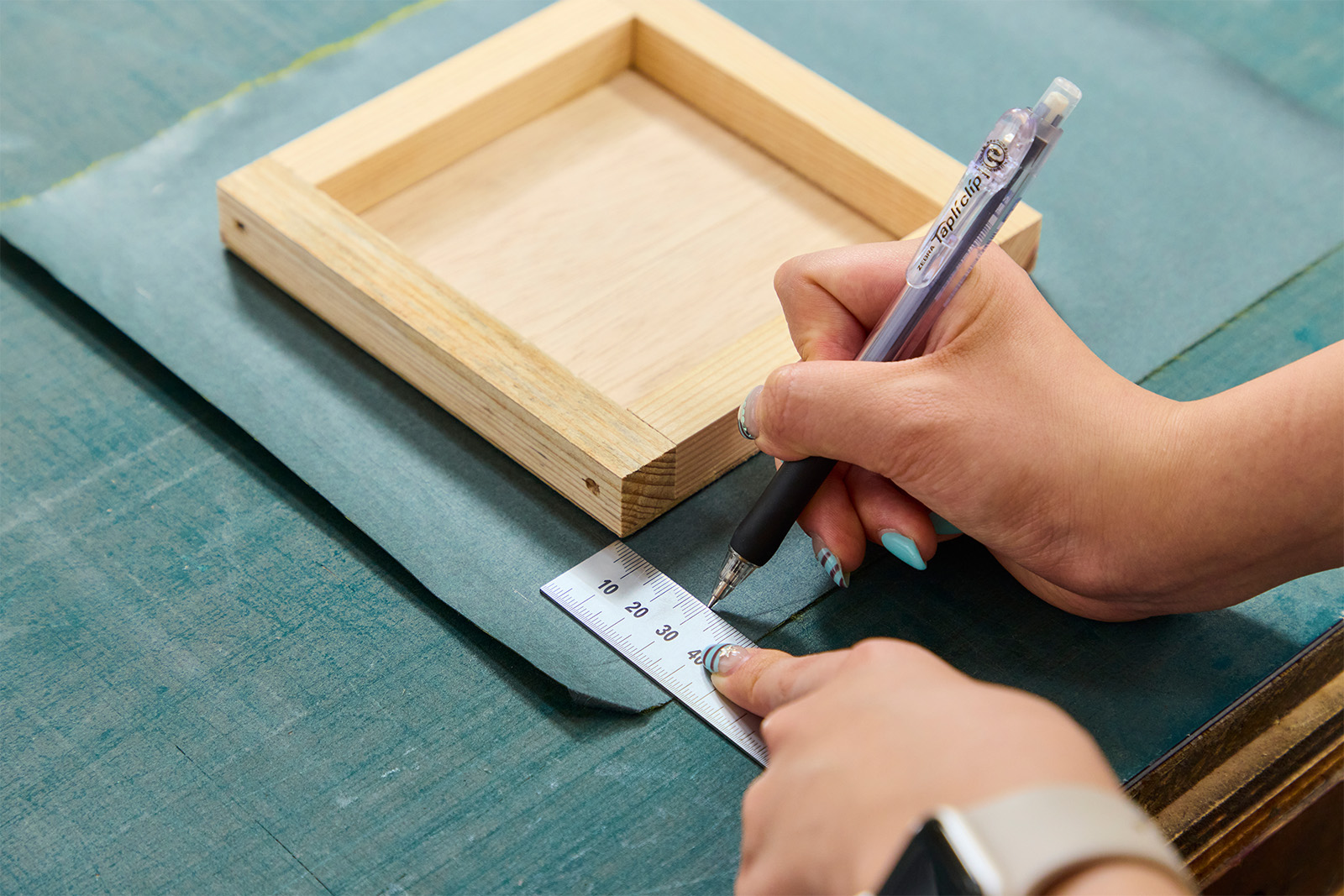
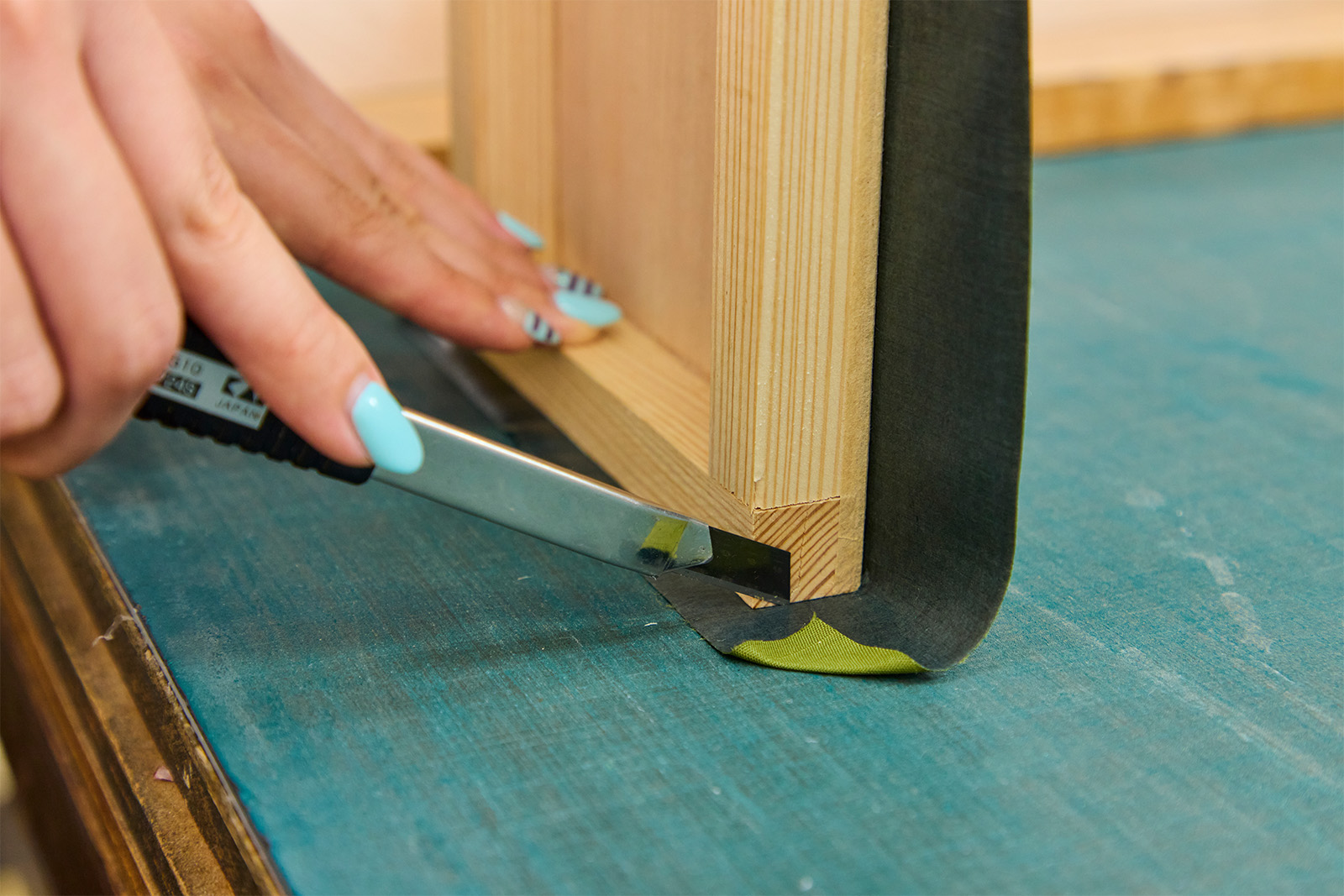
First, measure the wooden panel, then cut the Kireji and Washi paper, leaving about 3 cm (1.18 inches) extra on each side to wrap around the back.
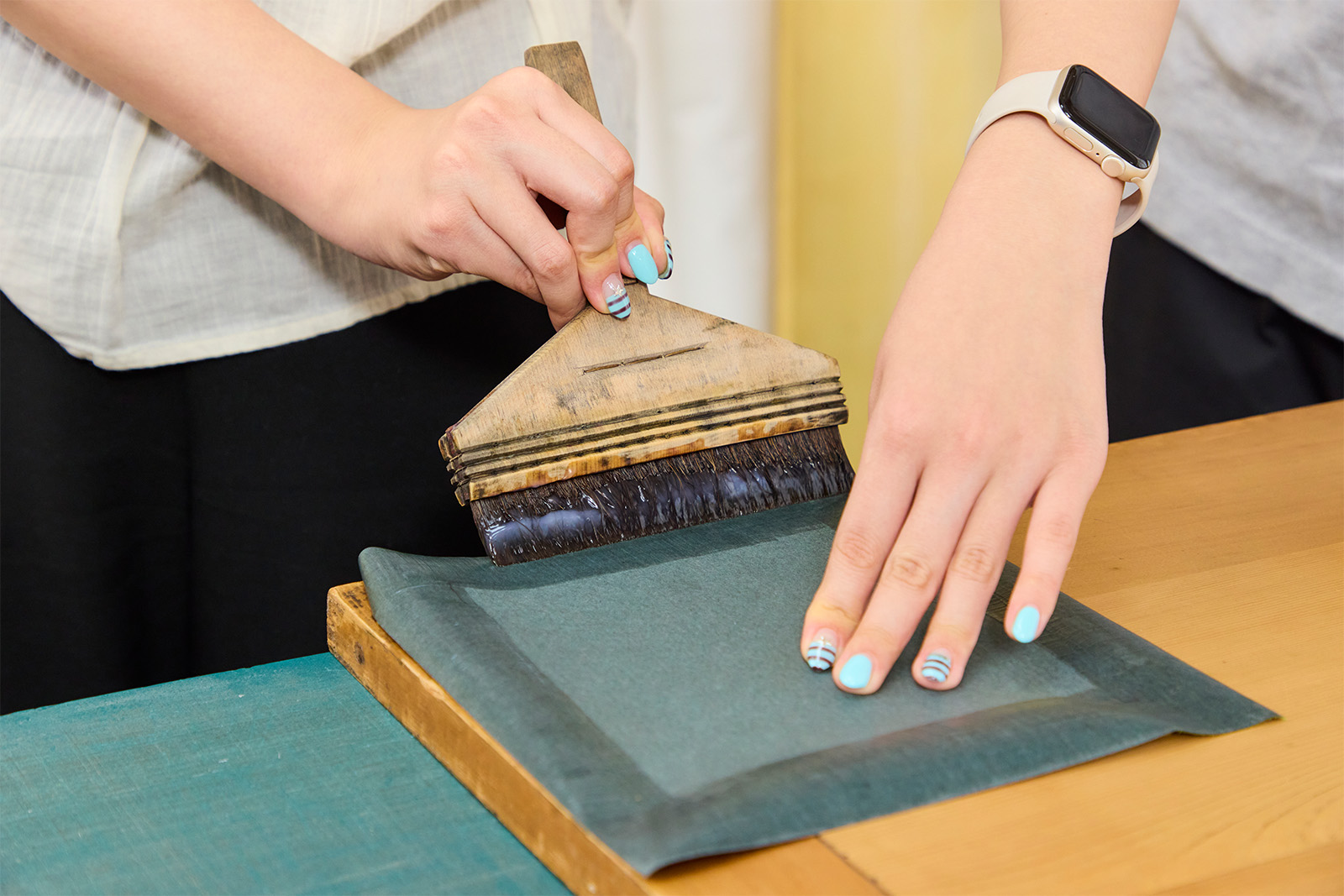
Lightly moisten the selected Kireji and Washi paper with a spray bottle, apply a thin layer of Shofu-Nori (a glue), and mount it onto the panel. Shofu-Nori is a traditional wheat starch paste that has long been used in Hyogu. It bonds materials firmly while becoming easier to work with when moisture is added, which is why it has long been used in mounting and restoration work. There is a reason behind every material artisans have continued to use even the paste.
For a beautiful finish, avoid pulling the Kireji and Washi paper too tightly; instead, let it follow the panel naturally as you wrap it around the back. Even the seemingly simple acts of cutting and pasting reveal the artisan’s know-how for bringing out the beauty of the materials.
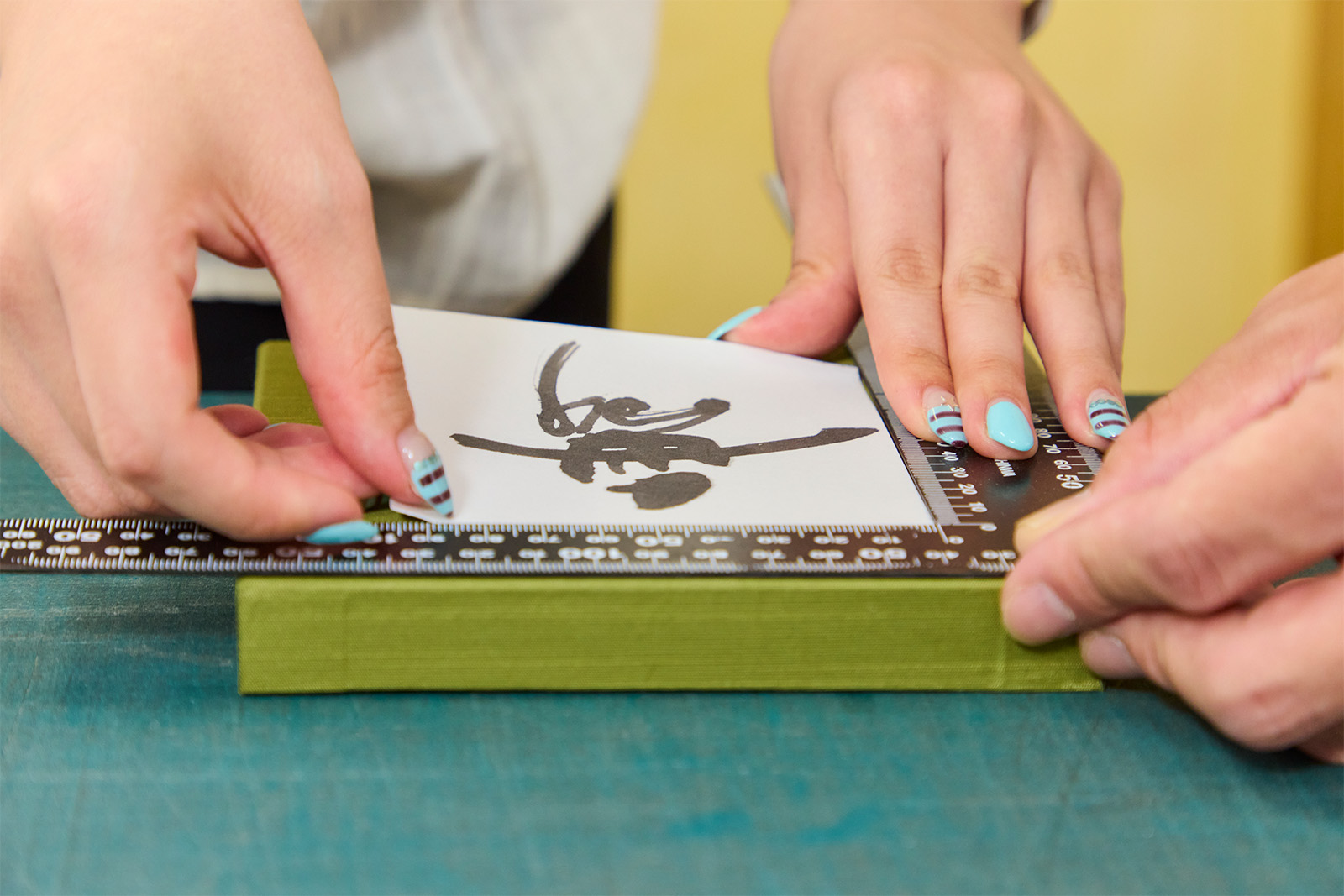
After the background has been mounted, let it dry before trimming the calligraphy piece you selected. Place it in the position you chose earlier, then paste it down while checking the overall balance. Finally, attach the hanging hardware and cord to the back of the panel, and your art panel is complete.
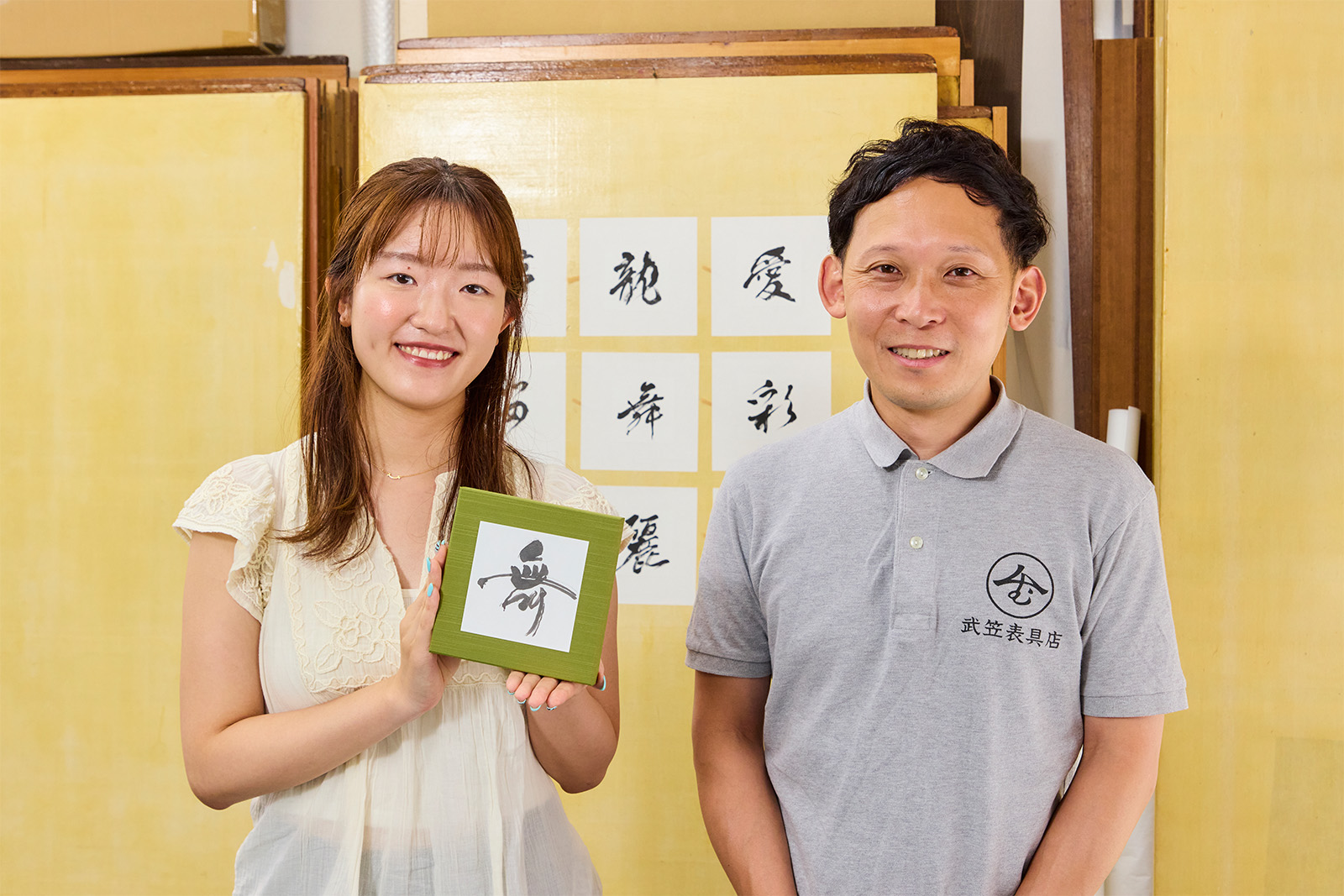
The result is a piece that brings together calligraphy you chose for its meaning, Kireji and Washi paper selected according to your own sensibilities, and the margins and placement you decided on yourself. Even if the same characters are selected, the expression of each choice is unique. This art panel, crafted with your own hands, the struggles along the way, and professional advice, will be a truly unique piece that reflects your personal touch.
The Perspective of Enhancing the Work
“In mounting, the frame should remain a quiet presence. The calligraphy or painting is the true protagonist, and our craft is dedicated to bringing out its full potential.”
Mr. Atsushi Mukasa, the 4th-generation artisan, describes the role of a Hyogu artisan in these terms. In a sense, Hyogu is the“Unsung Hero” supporting the calligraphy or painting that takes center stage. The true value of the craft lies not in drawing attention to itself, but in bringing out the full beauty of the work.
Each decision—from selecting the calligraphy and materials to determining the margins and placement—is guided by the Hyogu artisan’s eye for presenting the work at its best. As Mr.Mukasa says, “I think it would be interesting if visitors could experience what Hyogu artisans are thinking as they work.” One of the unique appeals of this workshop is the chance to discover an artisan’s perspective that you would never notice simply by looking at the finished piece. Every time you see the finished art panel in your home, the words inscribed on it will surely bring back memories of your journey—the craftsmanship of the Hyogu-shi (mounting-artisan) and the touch of Japanese culture you experienced.
Founded in 1898. Today, Mr.Atsushi Mukasa, the 4th generation, serves as the company’s representative. The company handles a wide range of work, from the creation and restoration of Kakejiku (hanging scrolls), Byoubu (folding screens), Gaku (framed works), Fusuma (sliding doors), and Shoji (paper screens) to supporting calligraphy exhibitions, too. While carrying on traditional techniques, the company also explores new forms of craftsmanship and mountings that harmonize with contemporary living spaces.