Tokyo’s Dyeing Culture, Nurtured by Clear-Flowing Rivers
Dyeing is an essential part of Edo culture. Dyers set up workshops along rivers such as the Kanda, drawn by the abundant supply of clean water. Takadano-Baba was one such area, and its dyeing traditions continue to this day as one of Tokyo’s leading centers of the craft.
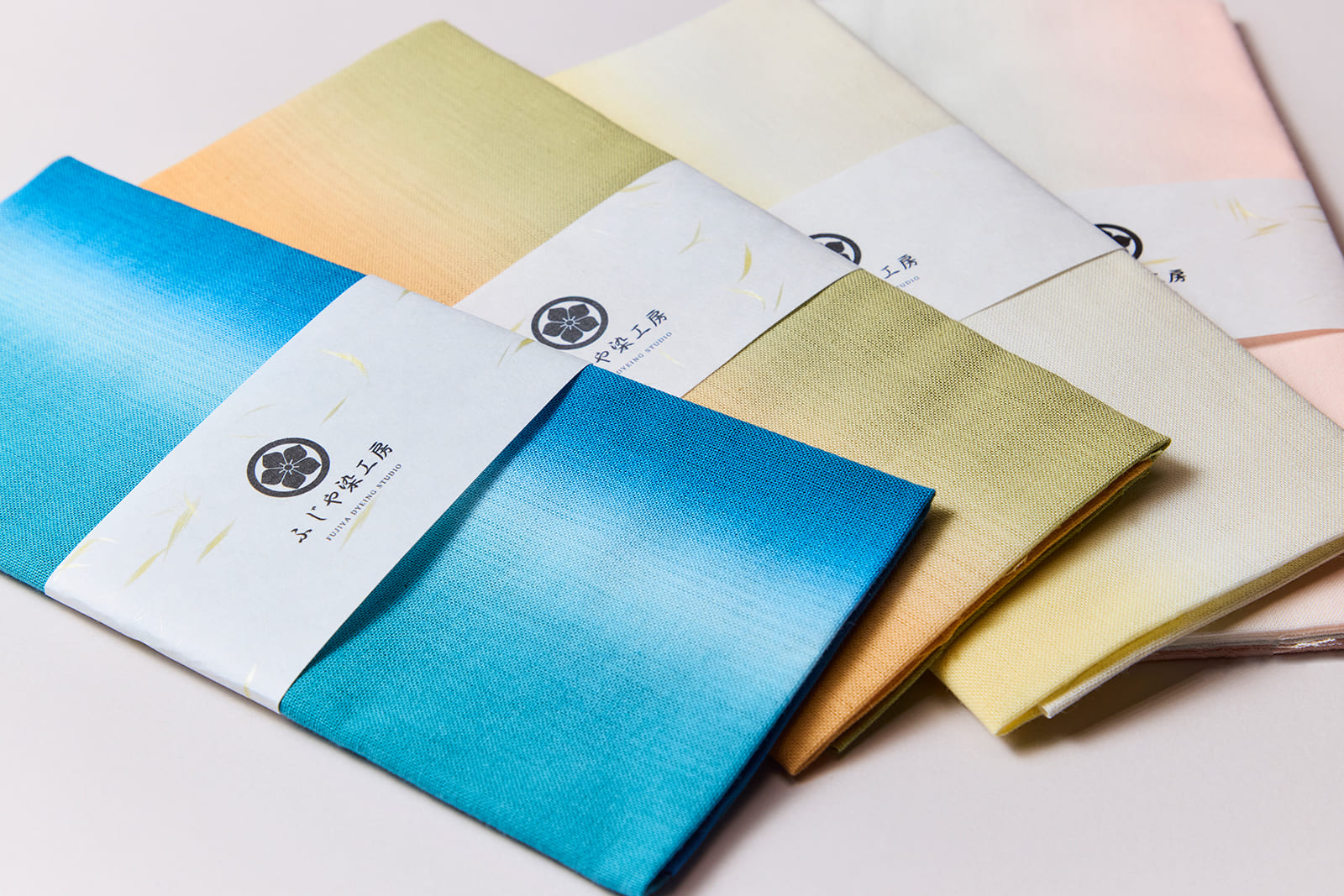
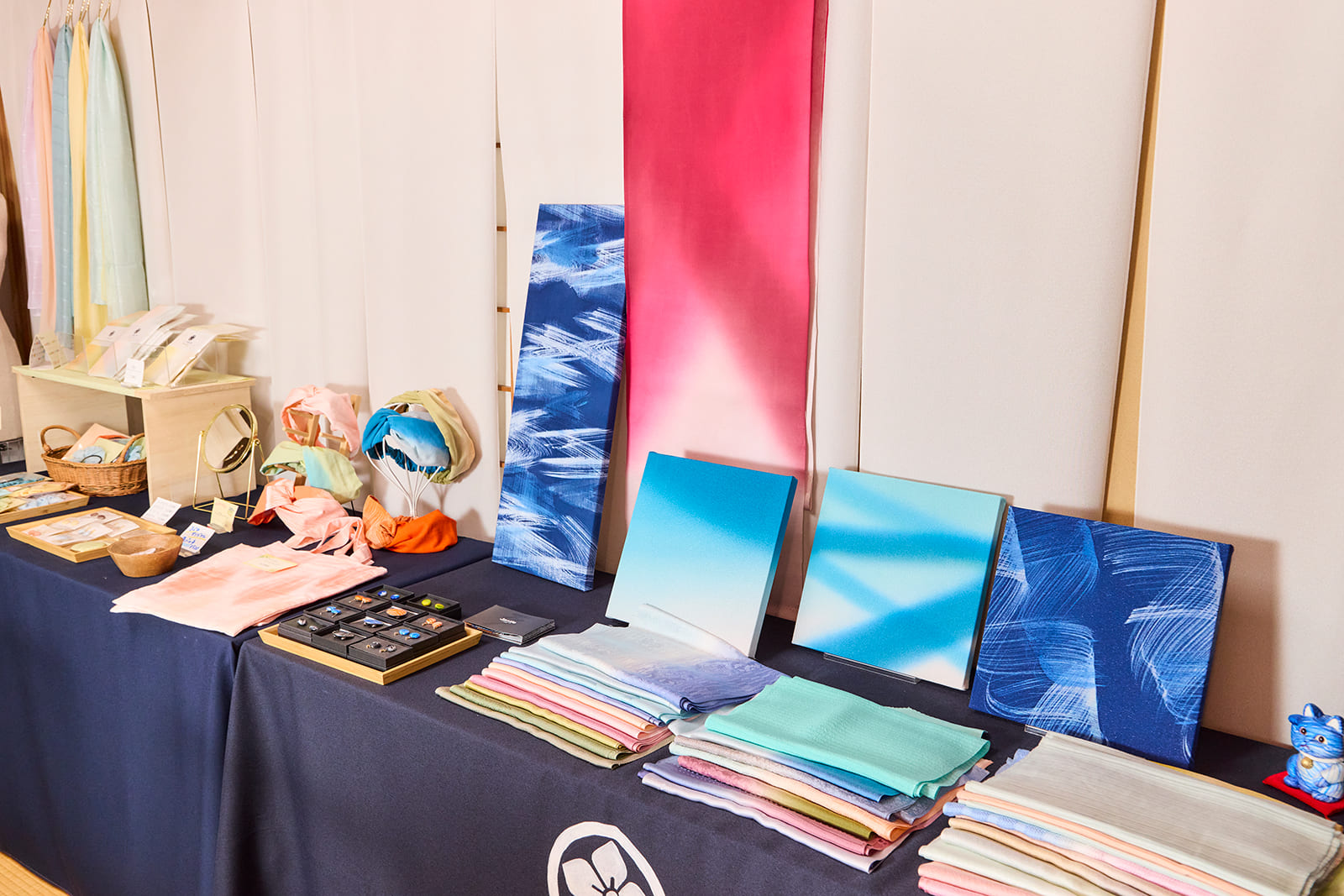
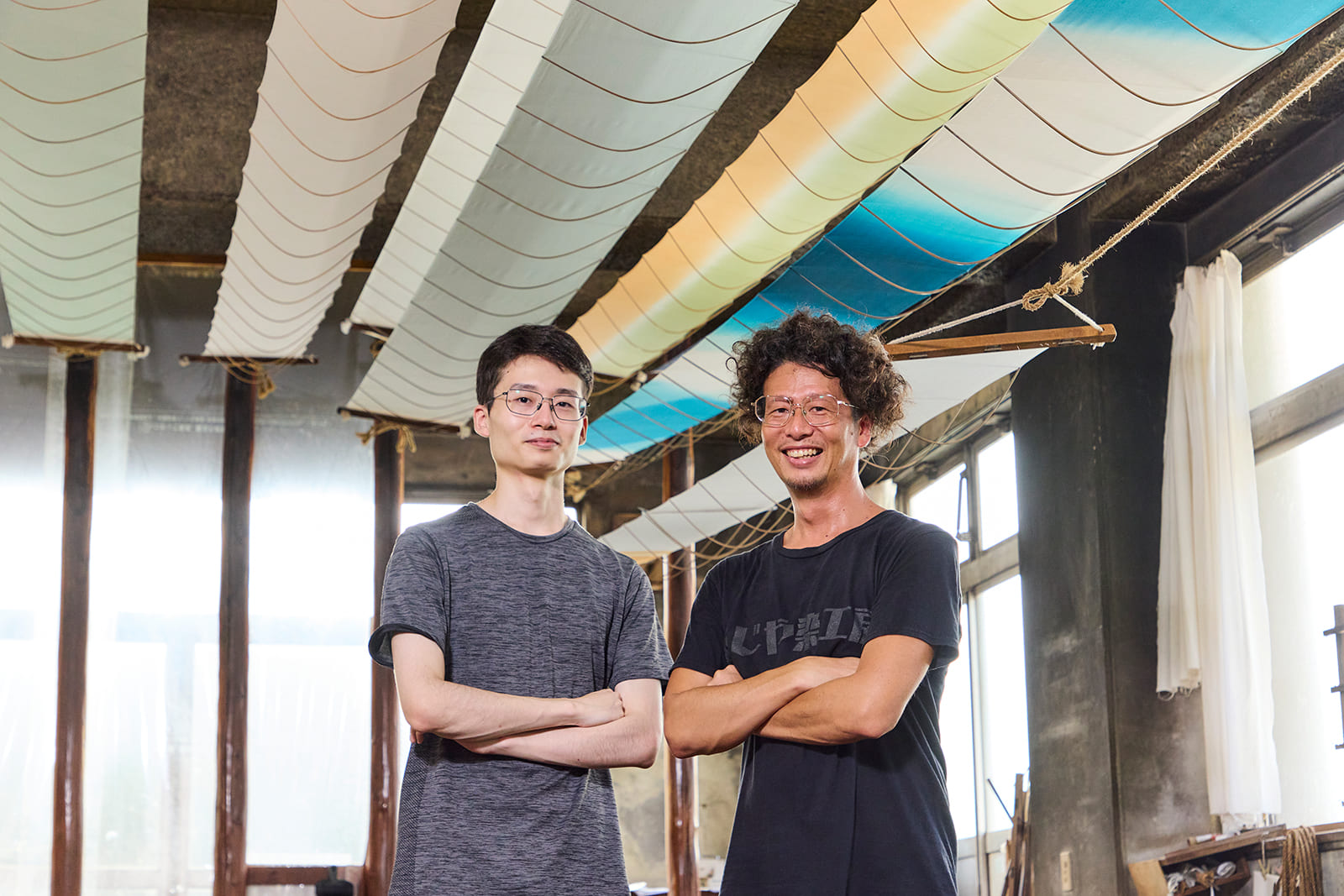
Fujiya Sen-Kobo Dyeing workshop was founded in 1952. For three generations, the studio has carried on the tradition of Hiki-Zome and refined the dyeing techniques used for solid-color Kimono and Tokyo Tegaki (hand-painted) Yuzen. Today, Mr. Takatoshi Nakamura, the 3rd generation artisan, works alongside his son, Takuro, passing the craft from one generation to the next. In recent years, the studio has expanded beyond Kimono into fashion accessories and interior pieces that utilize color and expressive brushwork. It is also bringing traditional techniques into contemporary life and sharing them with the world, including by exhibiting new stoles at trade fairs in Paris, France.
Work Alongside Artisans to Stretch Fabric and Experience Hiki-Zome Firsthand
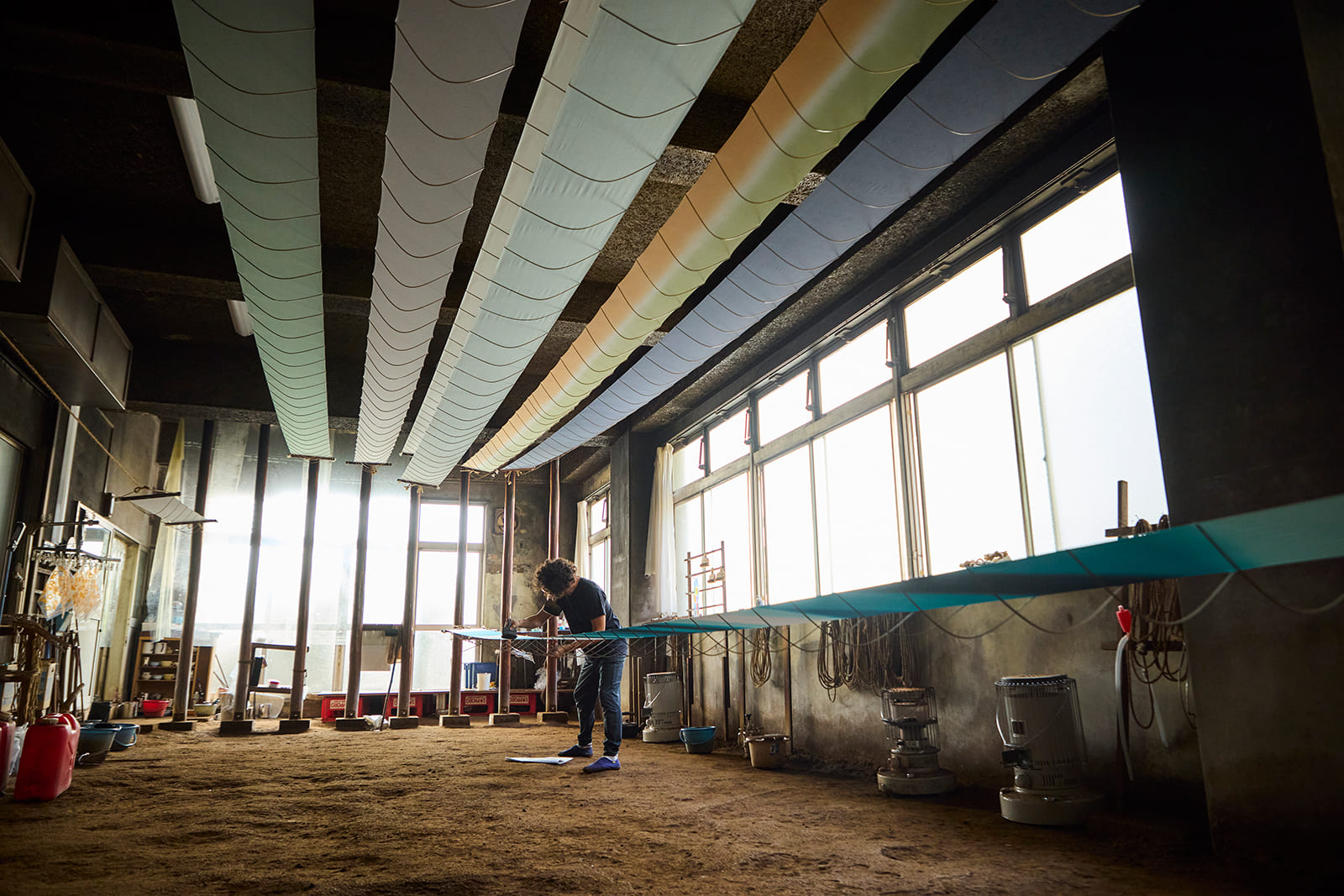
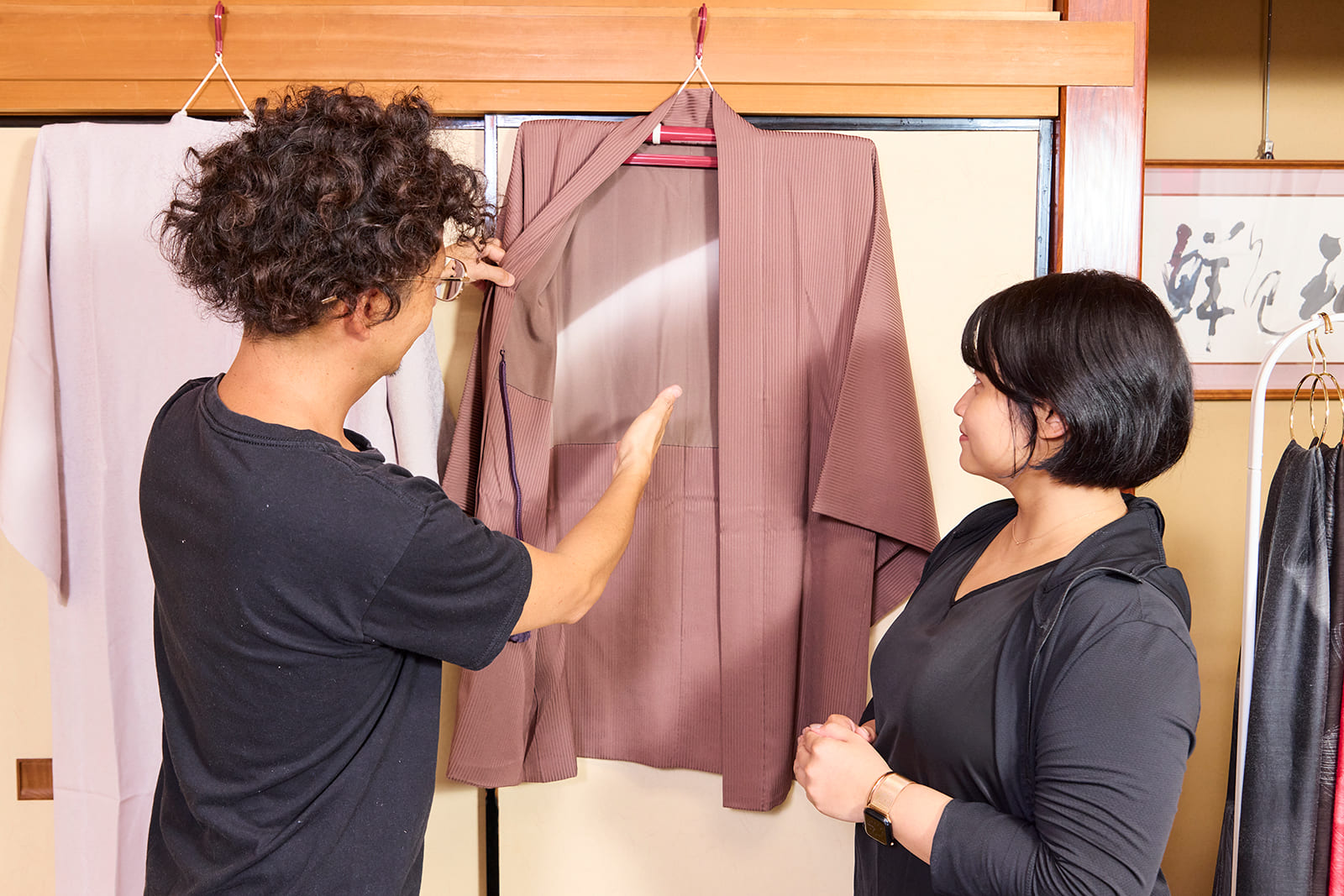
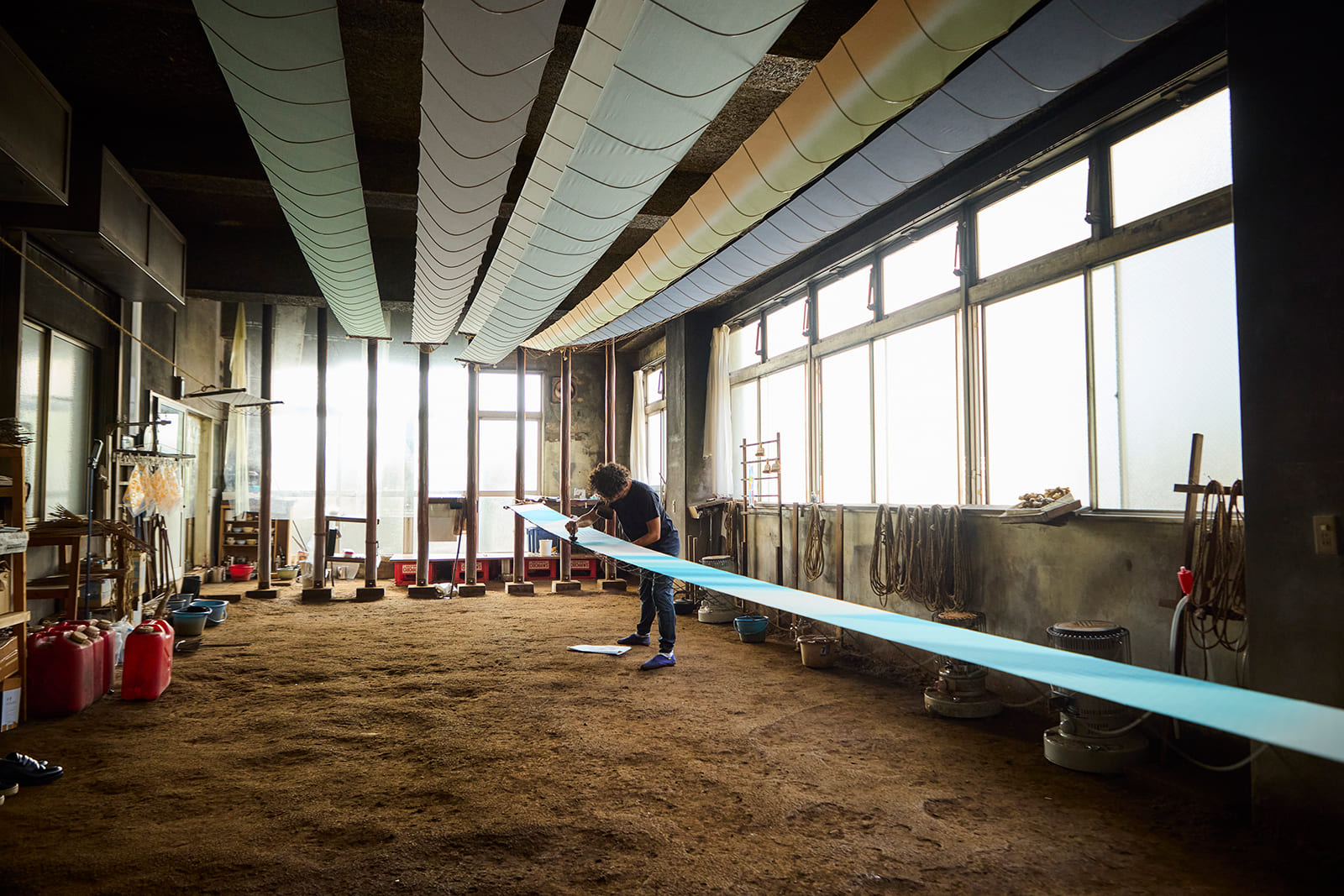
The experience starts with an introduction to Kimono and Japan’s dyeing culture. After learning from an artisan about the characteristics of Kimono, the Hiki-Zome technique, and the works created with it, you’ll head into the studio where the artisans work. In the traditional earthen-floored workspace, called Doma, where a 12-meter (approx. 39 feet) bolt of fabric can be stretched out in a straight line, you’ll get hands-on experience, starting with the preparation of the white fabric for dyeing.
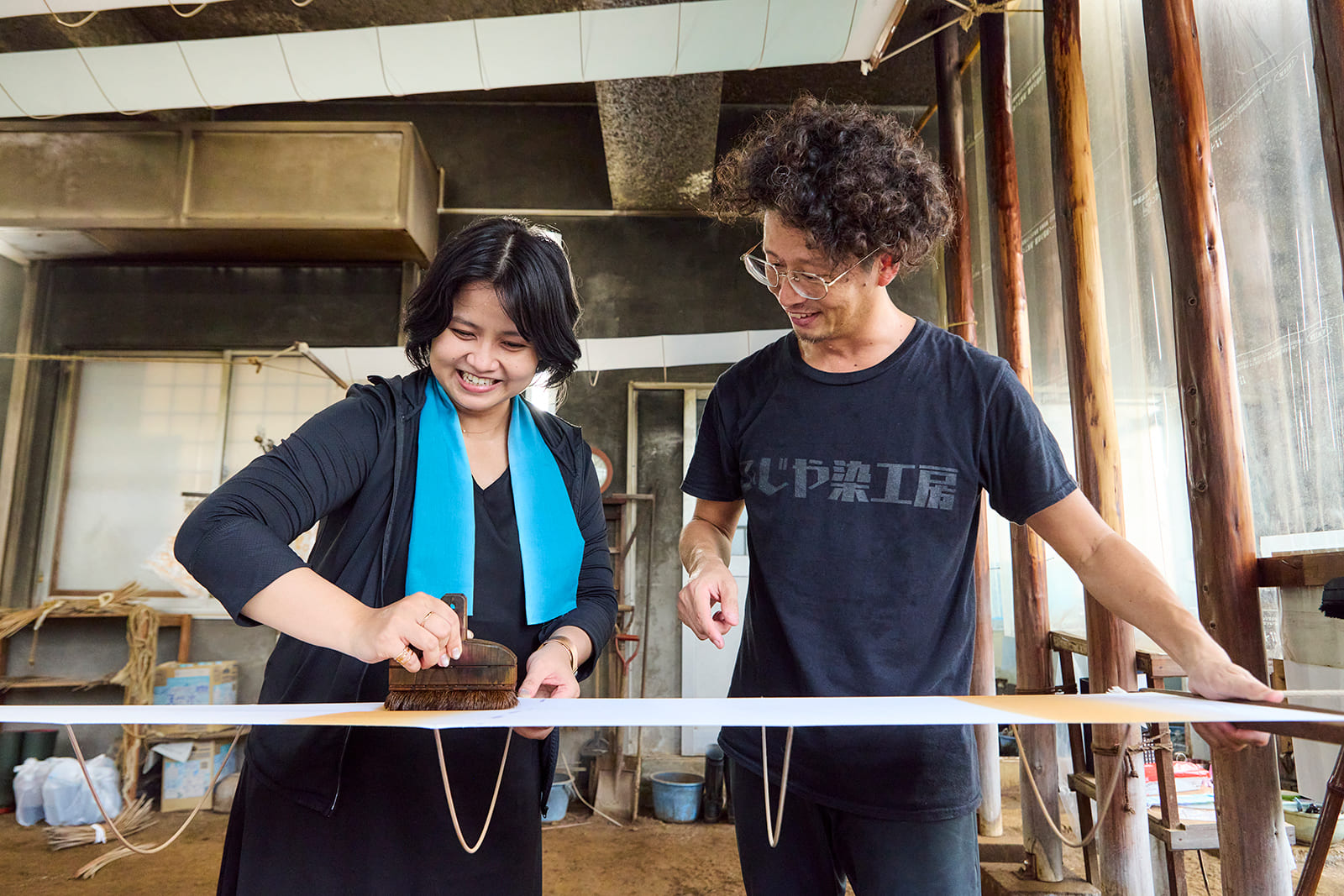
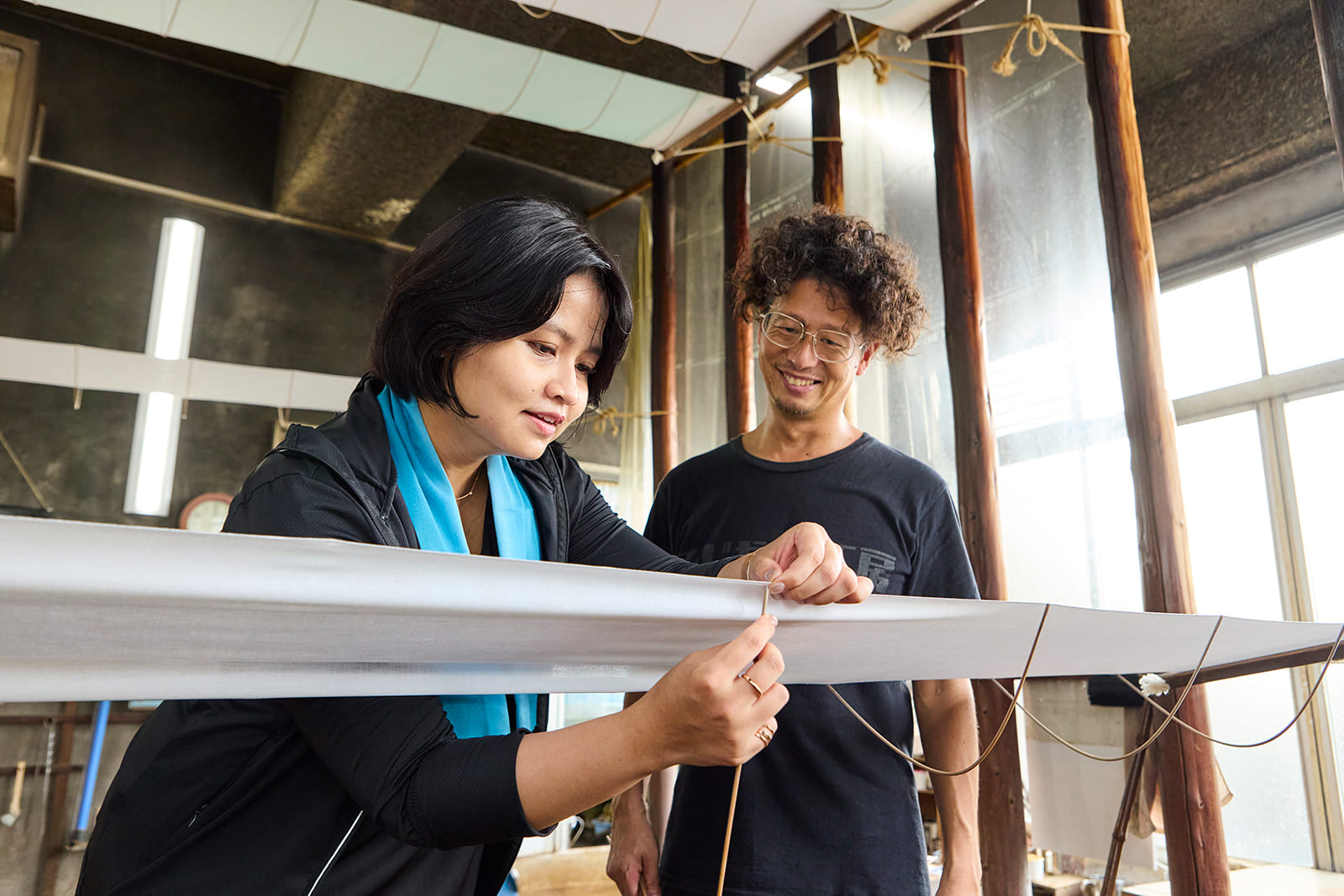
The bolt is secured at both ends using a pair of clamps, called Harite, fastened to posts. It is gripped securely in the Harite, then, along with the artisan, you’ll stretch it taut.
Next, you’ll use the Shinshi, a flexible bamboo rod with stainless-steel pins at both ends. The Shinshi is positioned across the width of the fabric so that the natural flex of the bamboo keeps the fabric flat and taut. This task may appear simple, but by trying it yourself you will come to appreciate the artisan’s practiced touch, as they know exactly how much force to apply.
With a Deer-Hair Brush in Hand, Learn to Control Color and Humidity
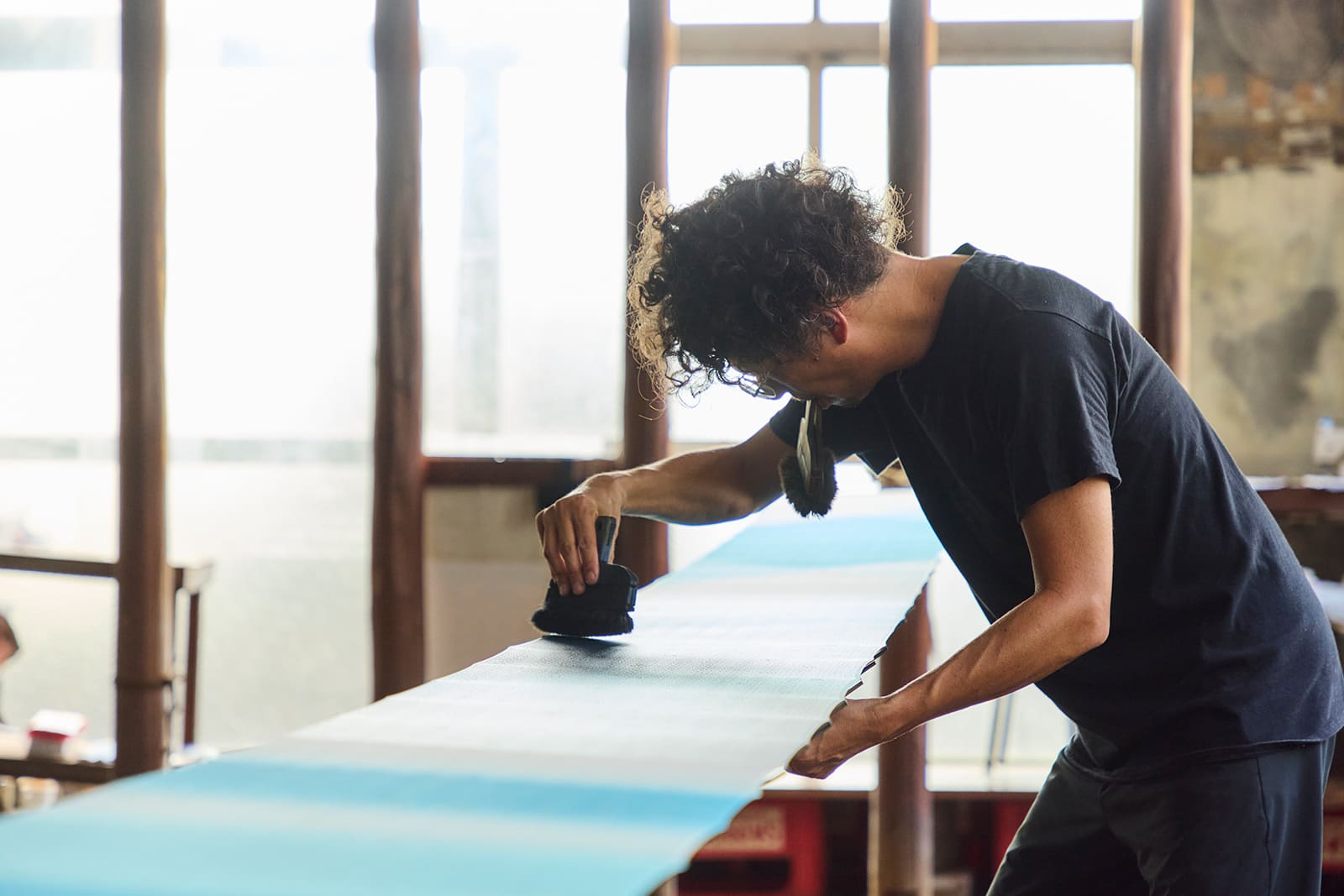
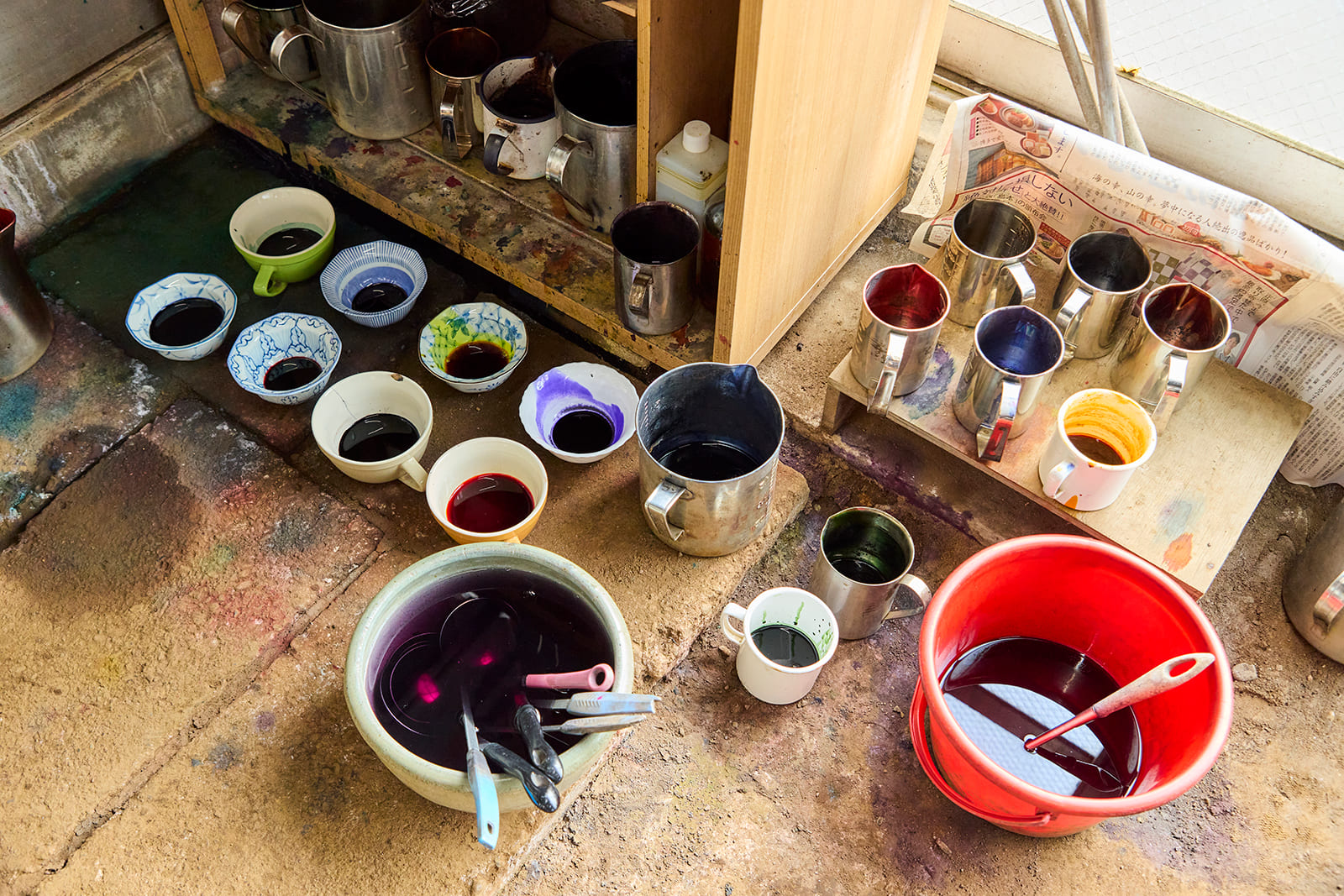
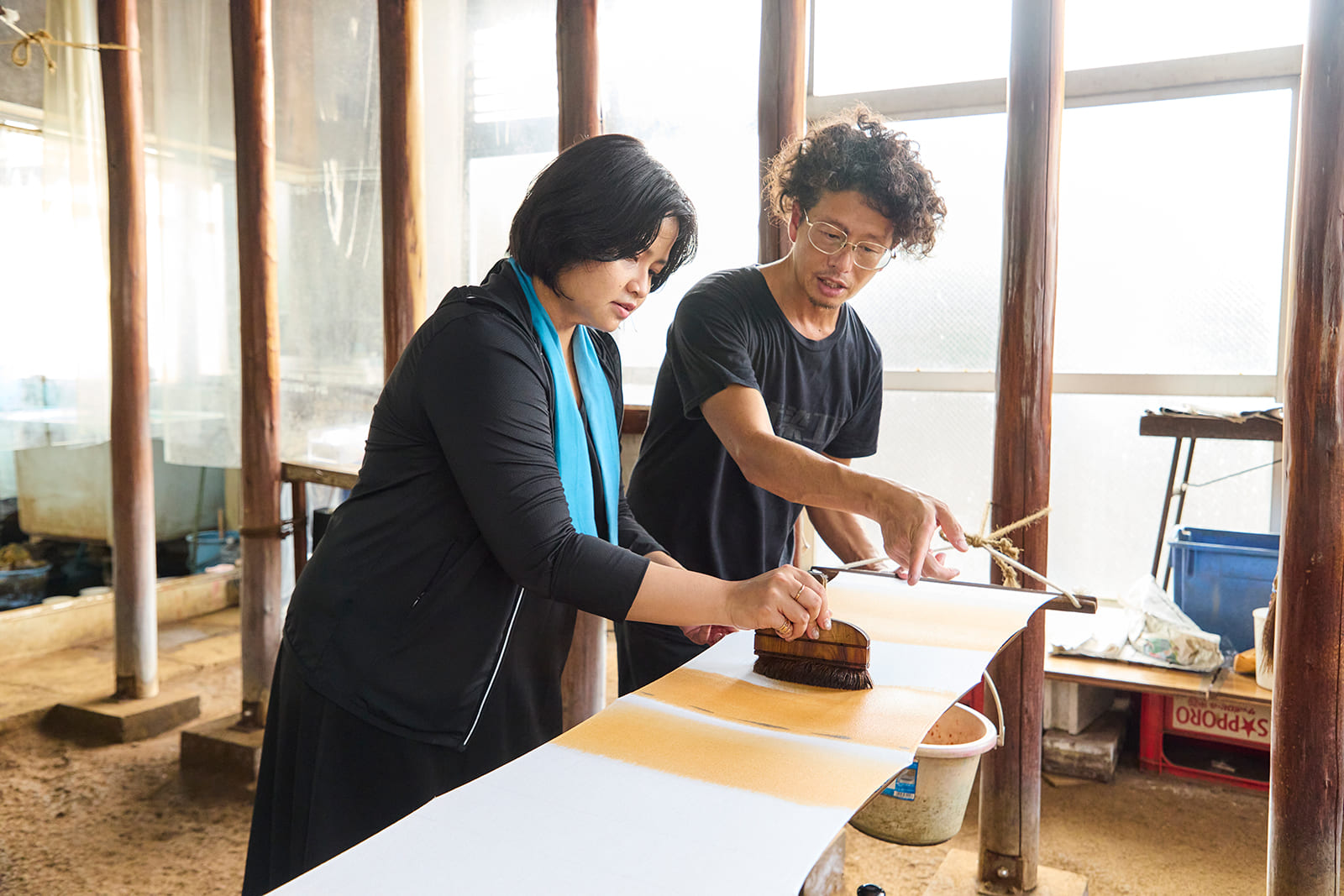
Once the fabric has been fully stretched, it’s time to try Hiki-Zome yourself. Artisans blend several base colors to create the precise shades needed for each piece. The fabric is dyed using a deer-hair brush covered in a generous amount of dye. Following the artisan’s demonstration, take the brush yourself and draw it across the fabric to lay down the color.
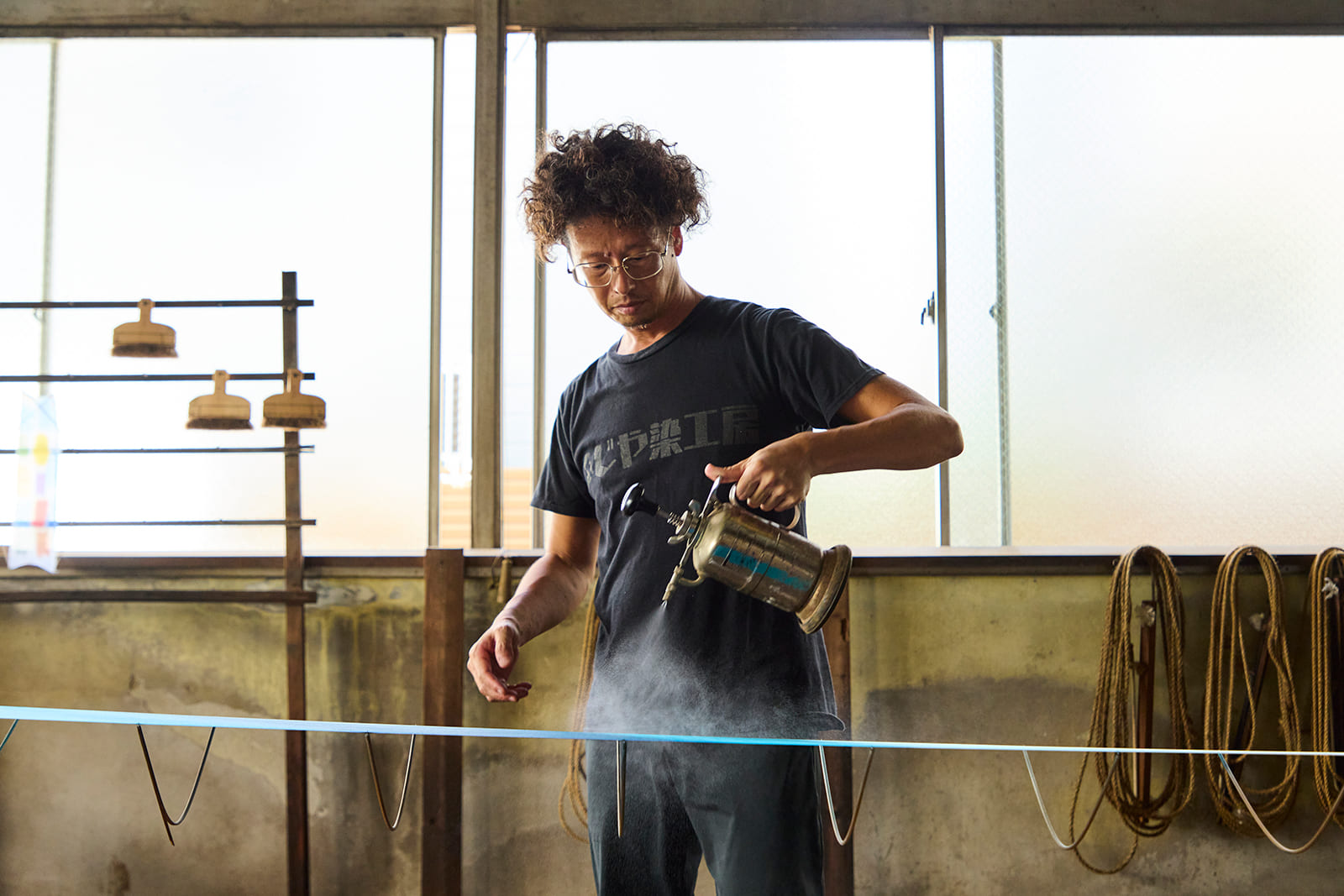
The final result depends on more than just how you move the brush or how much dye you use. The amount of moisture in the fabric can also cause unevenness in the finished color. That is why, even in summer, water may be sprinkled on the earthen floor (Doma) to help regulate the humidity.
From tools such as brushes and Shinshi to the earthen-floored workspace itself, every element that supports Hiki-Zome has a purpose. By trying the work yourself, you will gain a firsthand understanding of the wisdom passed down through generations of artisans, and the reasons behind it.
Follow the Process Beyond Dyeing and watch the Artisan’s Work with Fresh Eyes
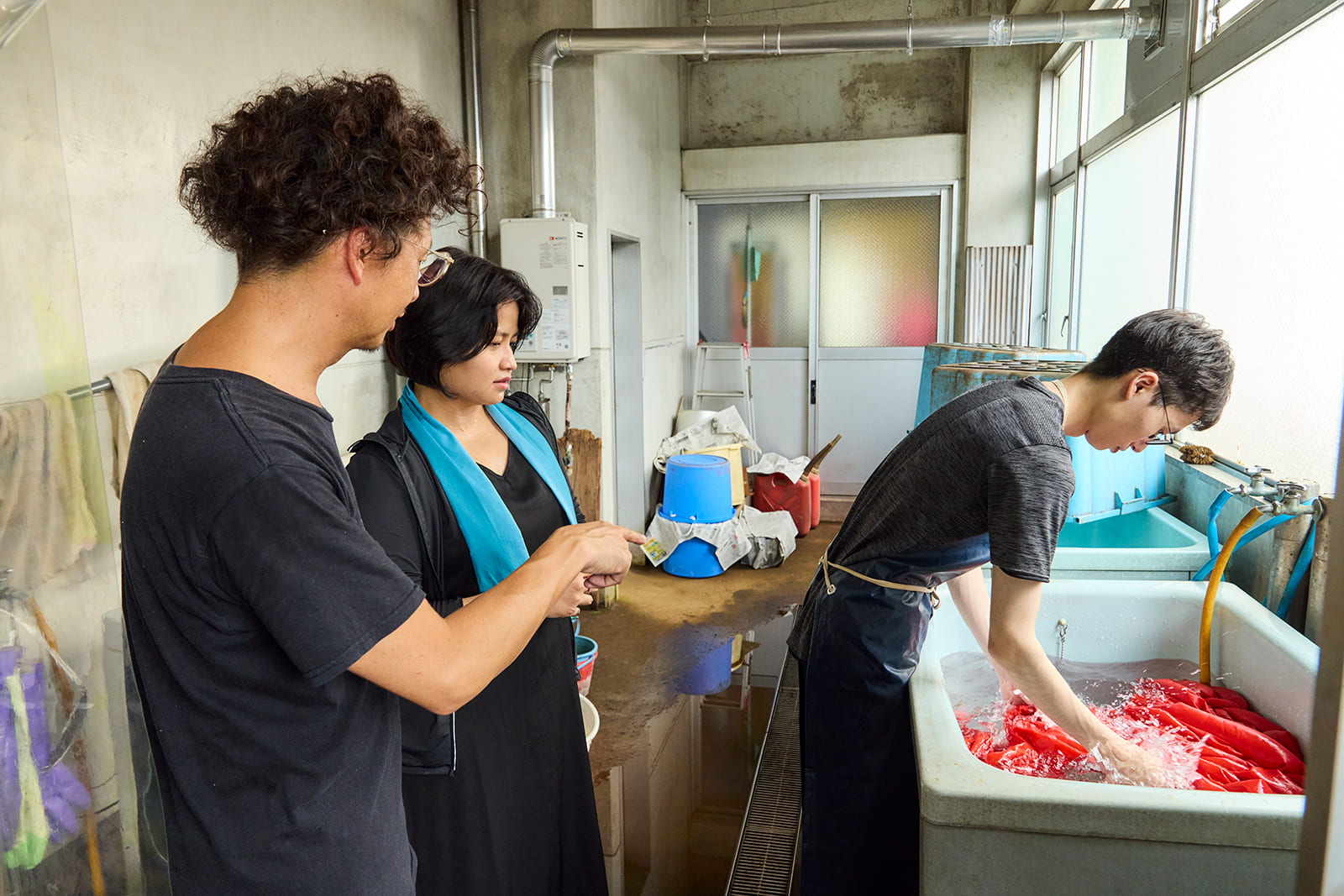
Once the fabric has been dyed, it is steamed to set the color. Steaming times vary depending on the fabric and color, ranging from 15 to 50 minutes. Next, excess dye is washed away in a rinsing process, called Mizumoto, which was once carried out in a river near the workshop. This is the final stage of the dyeing process.
Being able to watch artisans at work up close is another unique feature of this experience. Depending on which stage is being handled that day, you may even be able to watch Takuro (son) at work while Takatoshi (father) explains the process. You can see firsthand how these skills are being passed from a father to a son.
After following the entire process, you will return to the space where the finished works are displayed. The Kimonos and stoles you saw earlier will likely look different after your experience. The subtle gradations of color and traces of the brush that you may have barely noticed before will now reveal the artisan’s expertise, built up over many years. Having experienced even a small part of the process yourself, you will better appreciate the true value of the craftsmanship behind the beauty of the finished work.
“I think that by not just watching but trying it yourself, you can discover sensations you don't normally encounter in daily life. I hope you can gain experiences and feelings that are outside of your everyday routine."
says Mr. Takatoshi Nakamura.
Take all back home with you, not only the techniques and culture of Hiki-Zome, but also the memories of the conversations you shared with the artisans as you admired their work.
Founded in Takadano-Baba, Shinjuku-ku, Tokyo, in 1952. For three generations, the studio has carried on the traditional technique of Hiki-Zome. Known for creating rich, nuanced colors through custom color matching for each client, and dyes Kimono while also exploring new areas such as stoles and interior pieces. Fujiya Sen-Kobo Dyeing Workshop continues to expand the possibilities of Hiki-Zome in Japan and abroad.