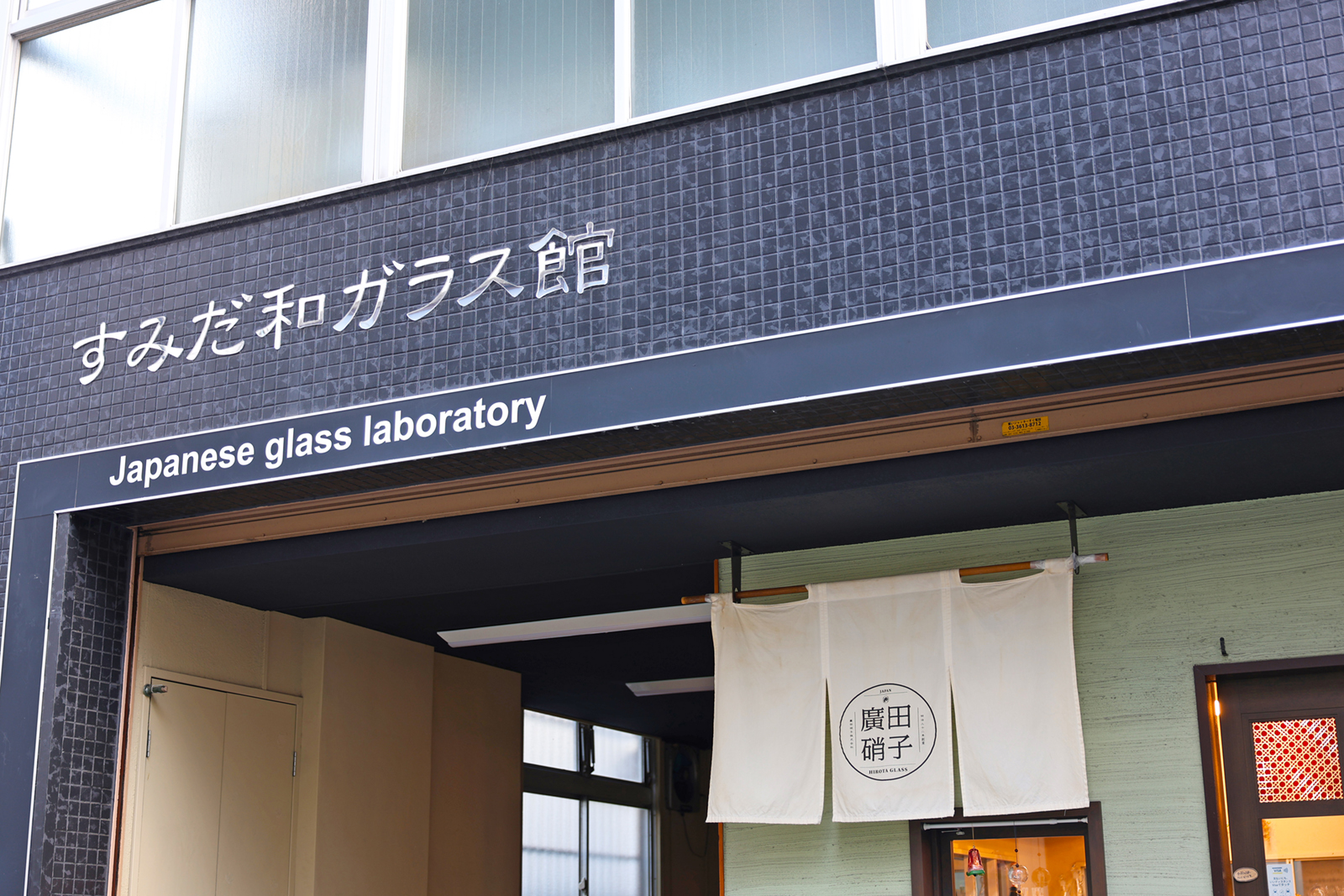
Edo glass preserves traditional craftsmanship while keeping up with the times
Edo glass was born by combining glass manufacturing techniques introduced from China and Europe in the Edo period with the master craftsmanship of Japan. From the late Edo period through the Meiji Restoration, it flourished as a local industry in Tokyo. Along the Oyoko River in Kinshicho, Sumida-ku, glass factories came to line the banks, manufacturing glass products. These were processed into Edo Kiriko cut glass at workshops in Kameido, Koto, Katsushika, and other districts, and sold in places like Nihonbashi and Ueno. During the Meiji era, Western glassblowing techniques were introduced, leading to the production of glass products such as lightbulbs and kerosene lamp flues. Since then, artisans have continued to create products that meet the demands of the times, while also preserving craftsman techniques dating back to the Edo period, as seen in examples like glass tableware.
Developing Edo glass as glassware instilled with a unique Japanese aesthetic
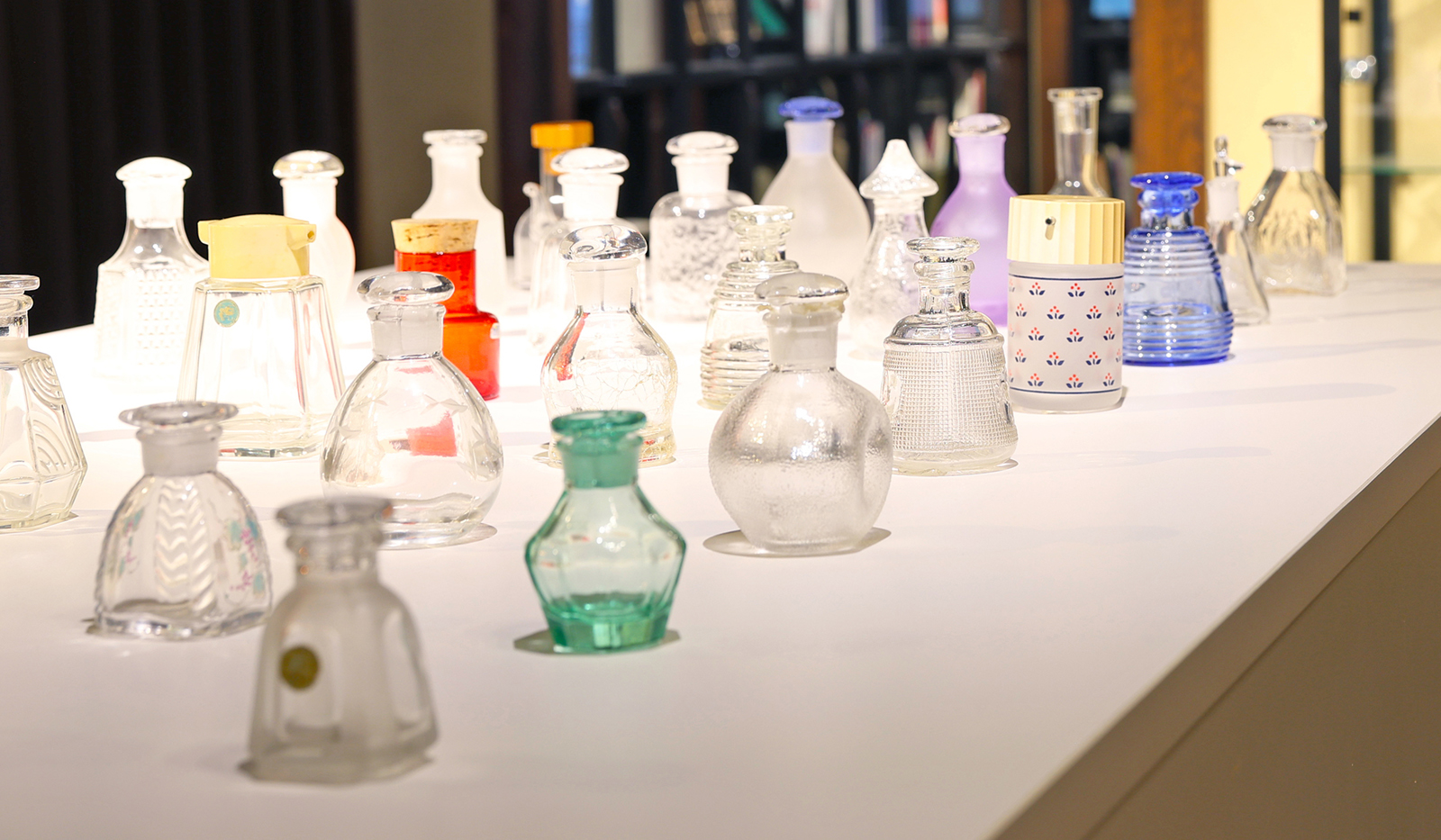
Hirota Glass Co., Ltd. was established as the Hirota Kinta Glass Shop in 1899 by Mr. Kinta Hirota, a founder. After the war, the company launched a series of products tailored to the changing lifestyles of people re-building their lives. The company gained popularity selling products like the brandy glass-shaped ashtray BYRON, the Original Suriguchi Soy Sauce Cruet, and the Daisy Series. After 2000, inspired by participating in overseas exhibitions, they decided to introduce the world to Japanese glass created using methods only possible in Japan.
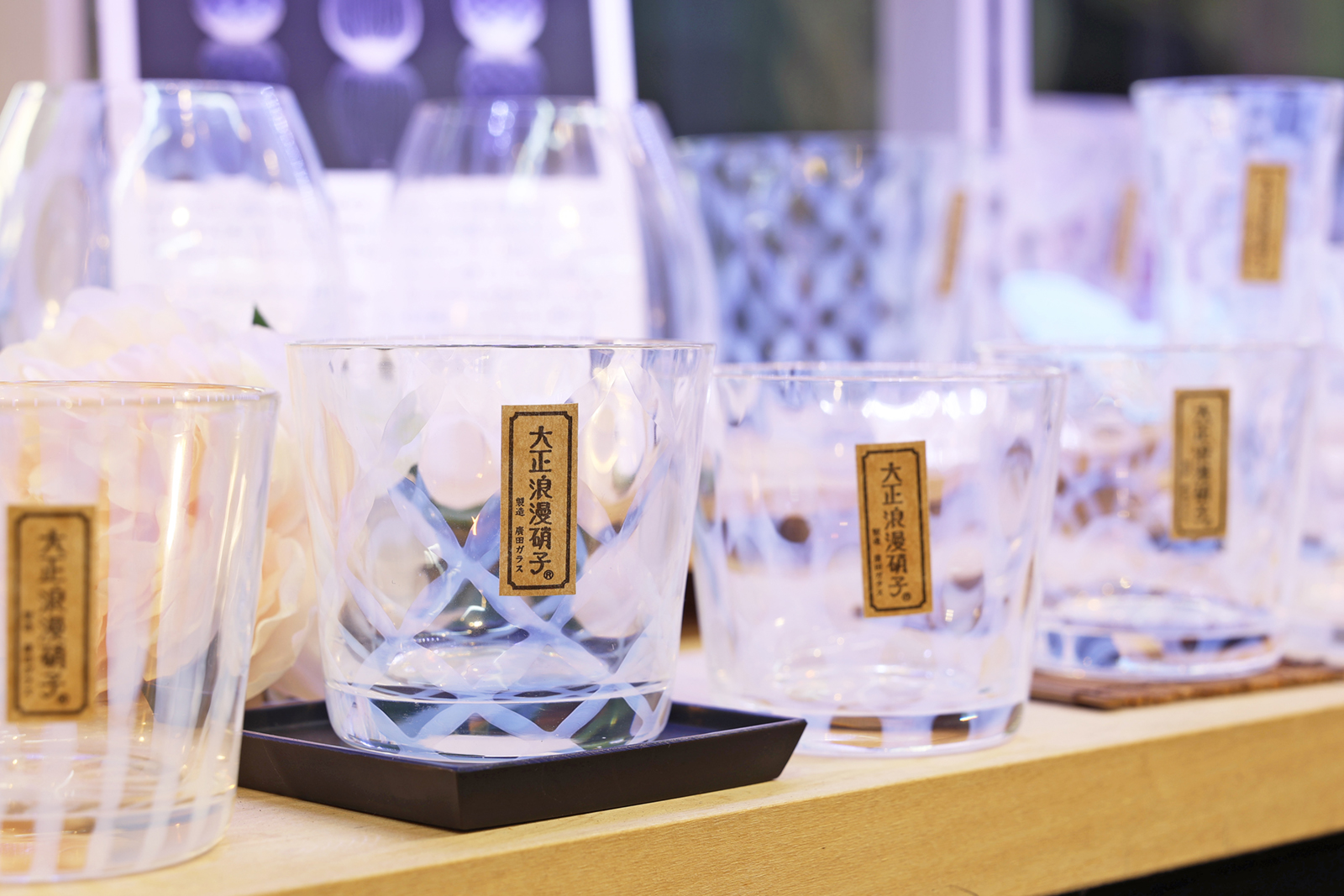
The Taisho Romance Glass Series revived the “Milky Glass” production method that swept the nation during the Taisho era. These products are crafted using a technique that employs bone ash, a natural material, to bring out the distinctive Milky-Glass effect. They are supposedly a very rare type of glass product today. Due to its rarity, it was awarded the Sumida Modern Certified Product in 2012. Futachoko glasses with lids are crafted using Edo Kiriko cut glass techniques with over 150 years of history, and are designed with traditional and modern patterns. They can be used not only as tableware, but also as candle holders and small item containers. The beautiful Edo glassware created by Hirota Glass blends in with your daily life while adding an extra grade of luxury to your surroundings.
Try crafting recycled glass using Edo glass scrap material
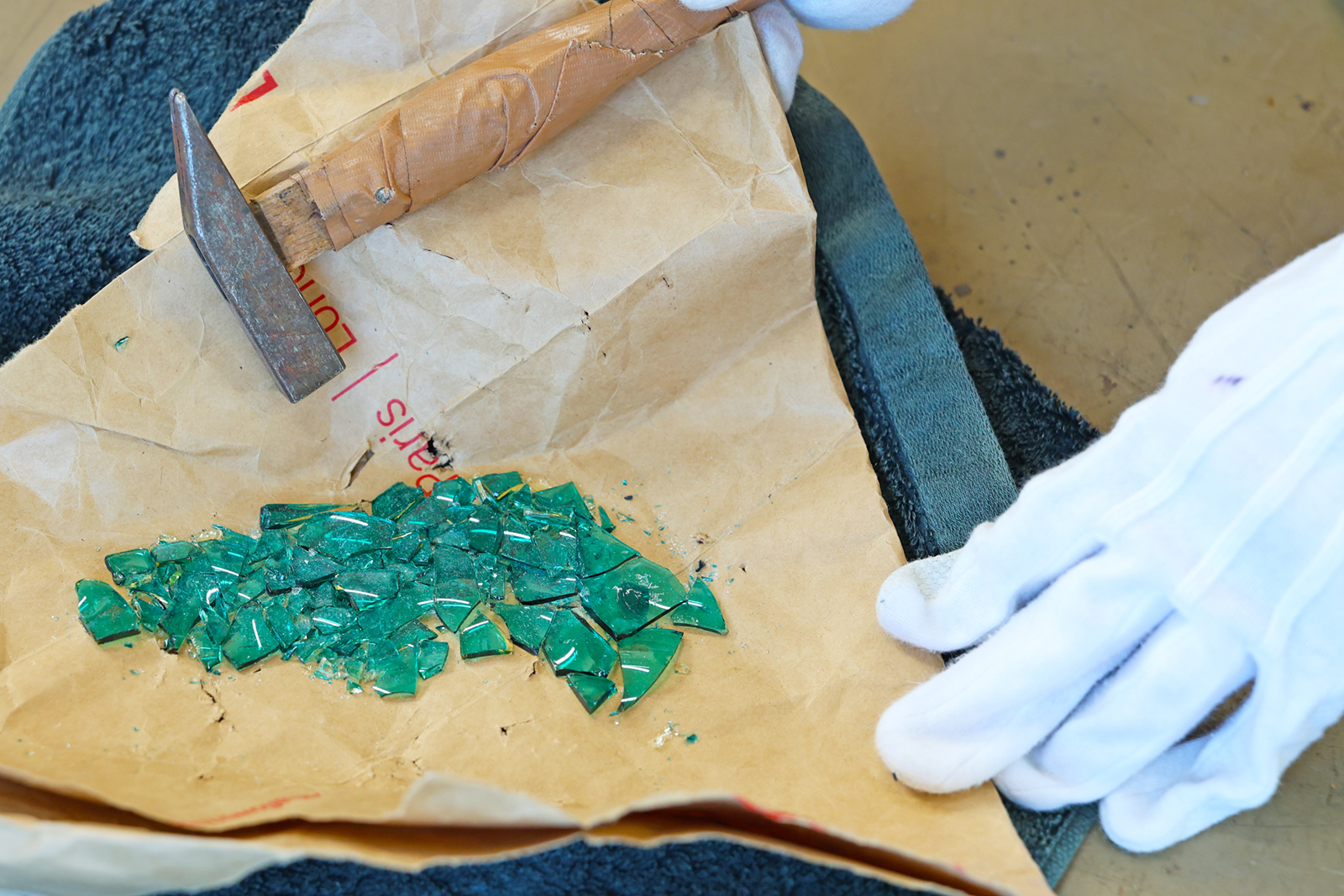
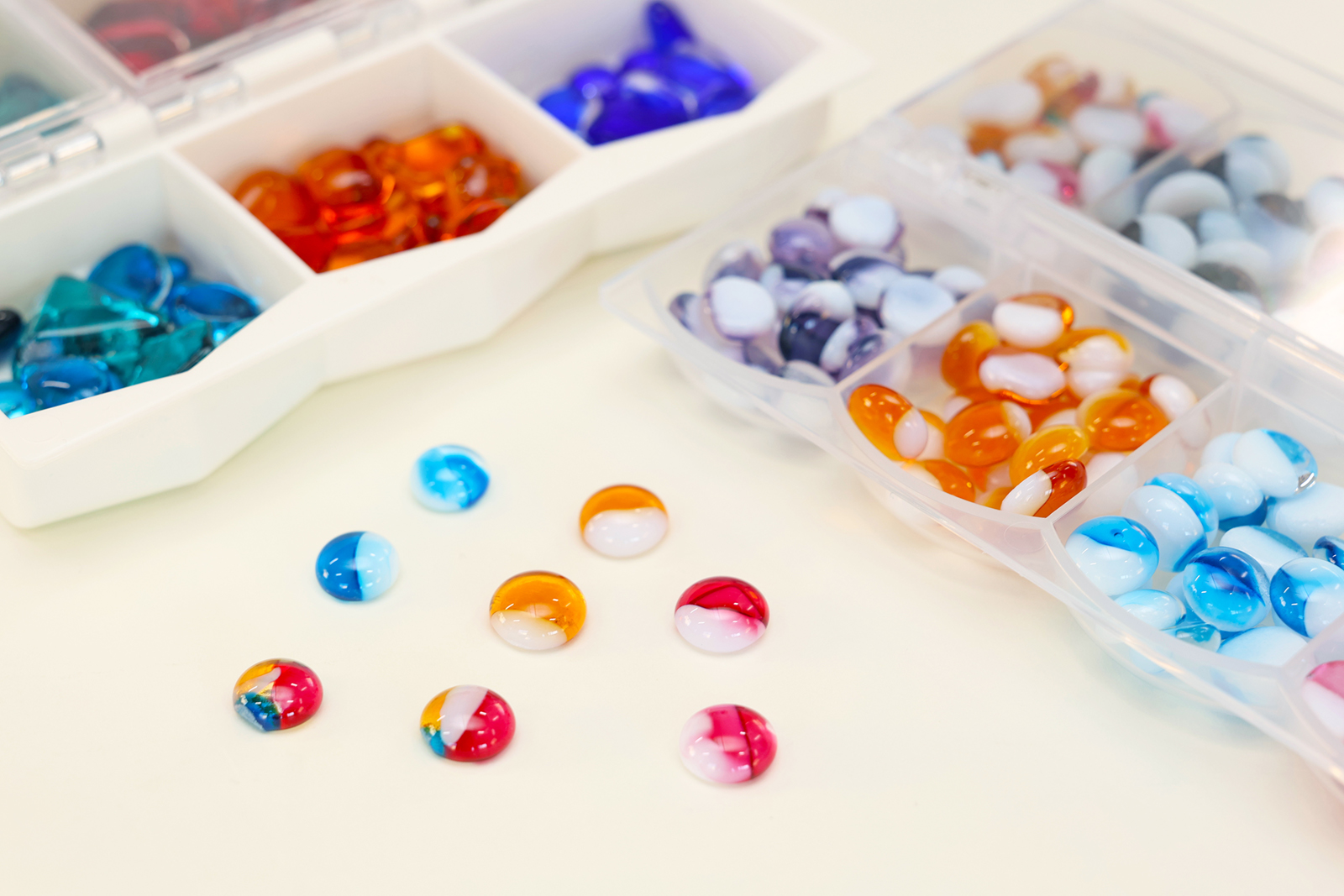
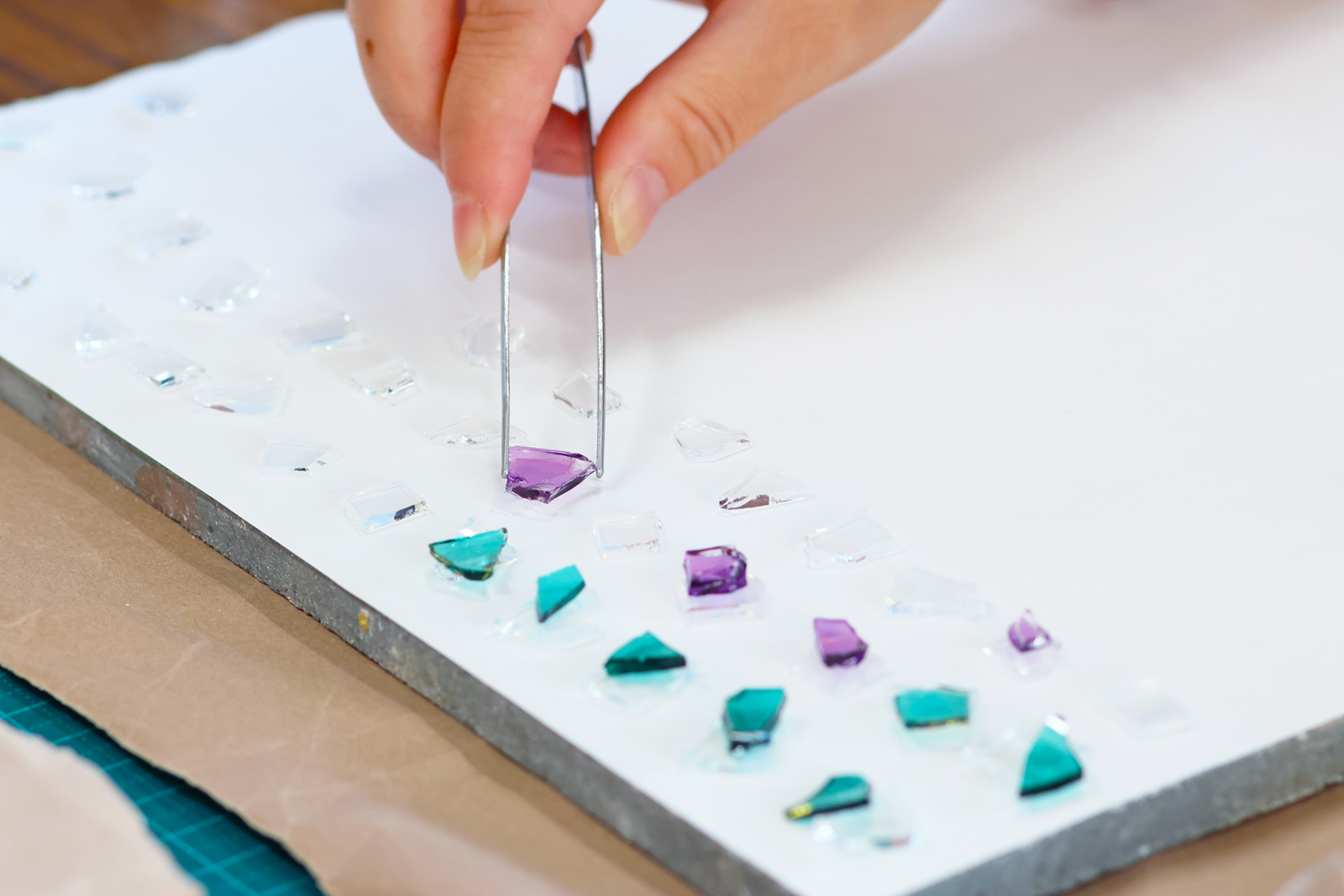
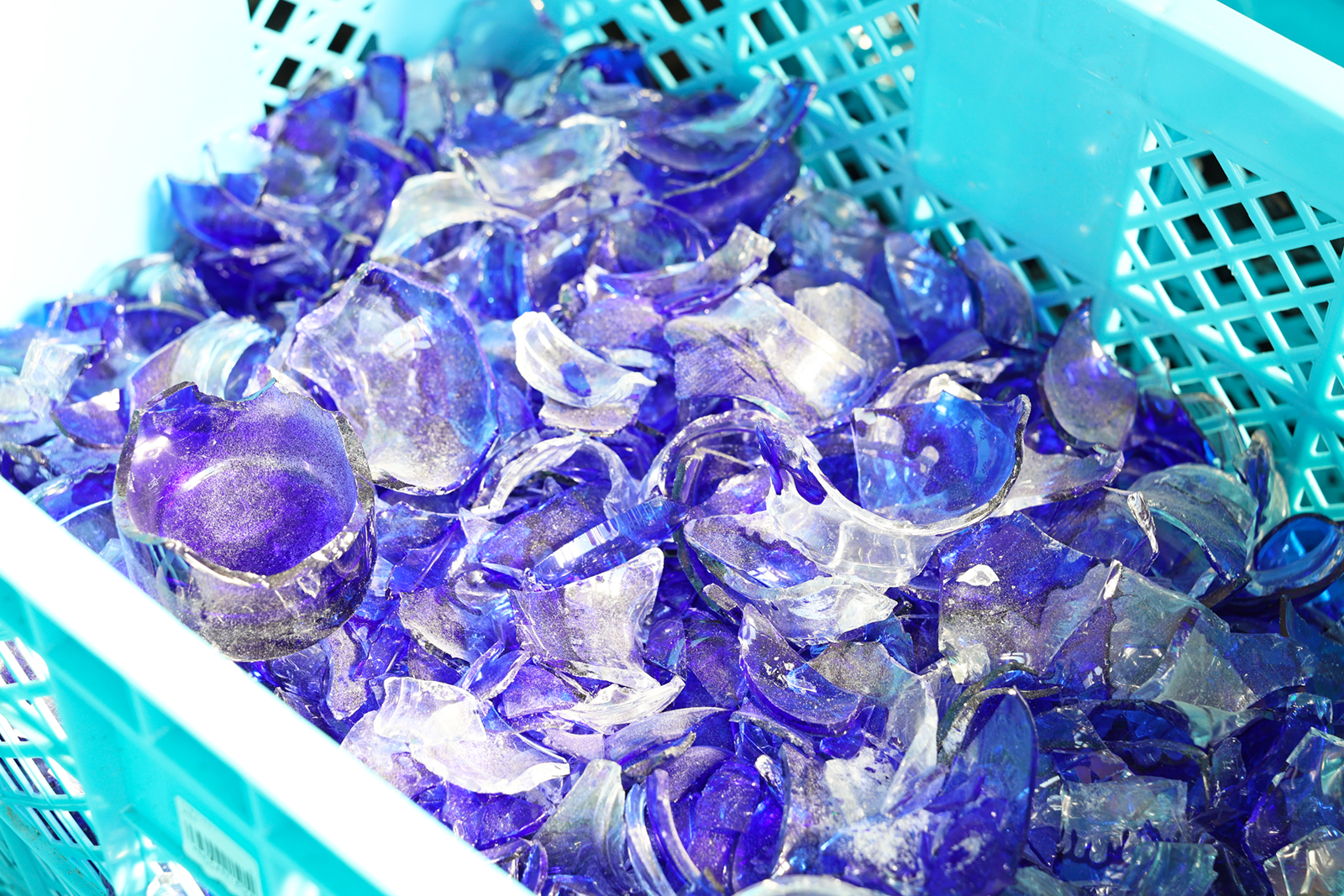
At this activity, a designated staff member will first give you a brief explanation about the history of Edo glass and Hirota Glass. Then, it is time to start crafting recycled glass. The scrap material from Edo glass is further crushed into smaller pieces with a hammer. Glass fragments of a size suitable for accessories are then sorted and arranged on the paper. At this stage, arranging the white glass pieces and then placing the colored glass pieces on top, will create beautiful, recycled glass with blended colors.
After arranging the glass pieces, they are placed in an electric kiln and heated at high temperatures to produce beautiful glass balls. In the activity, you complete all of the steps up to insertion in the electric kiln.
Edo glass scrap material includes cut pieces from Edo Kiriko cut glass and broken glass products. Glass is difficult to handle, and producing recycled glass is no easy task. However, through extensive research on recycled glass, Hirota Glass has succeeded in creating round glass pellets. Additionally, by layering and melting two colors of glass together, they are able to create glass balls with a gently blended color effect like marbles. To showcase the beauty of glass balls created in this way, Hirota Glass develops new accessory products. Experience an activity in Edo glass sustainability developed by Hirota Glass.
Select your favorite recycled glass and create an original accessory
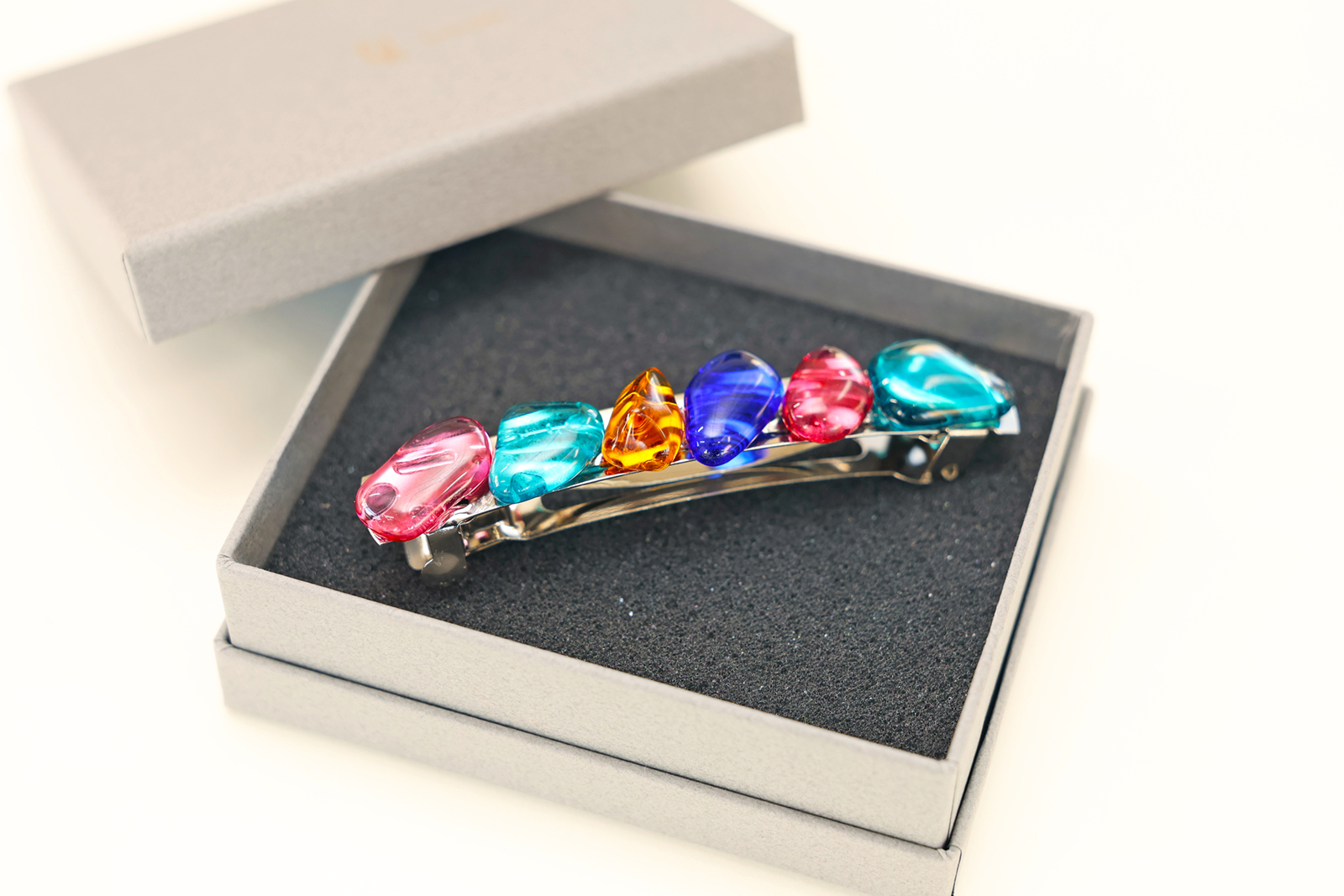
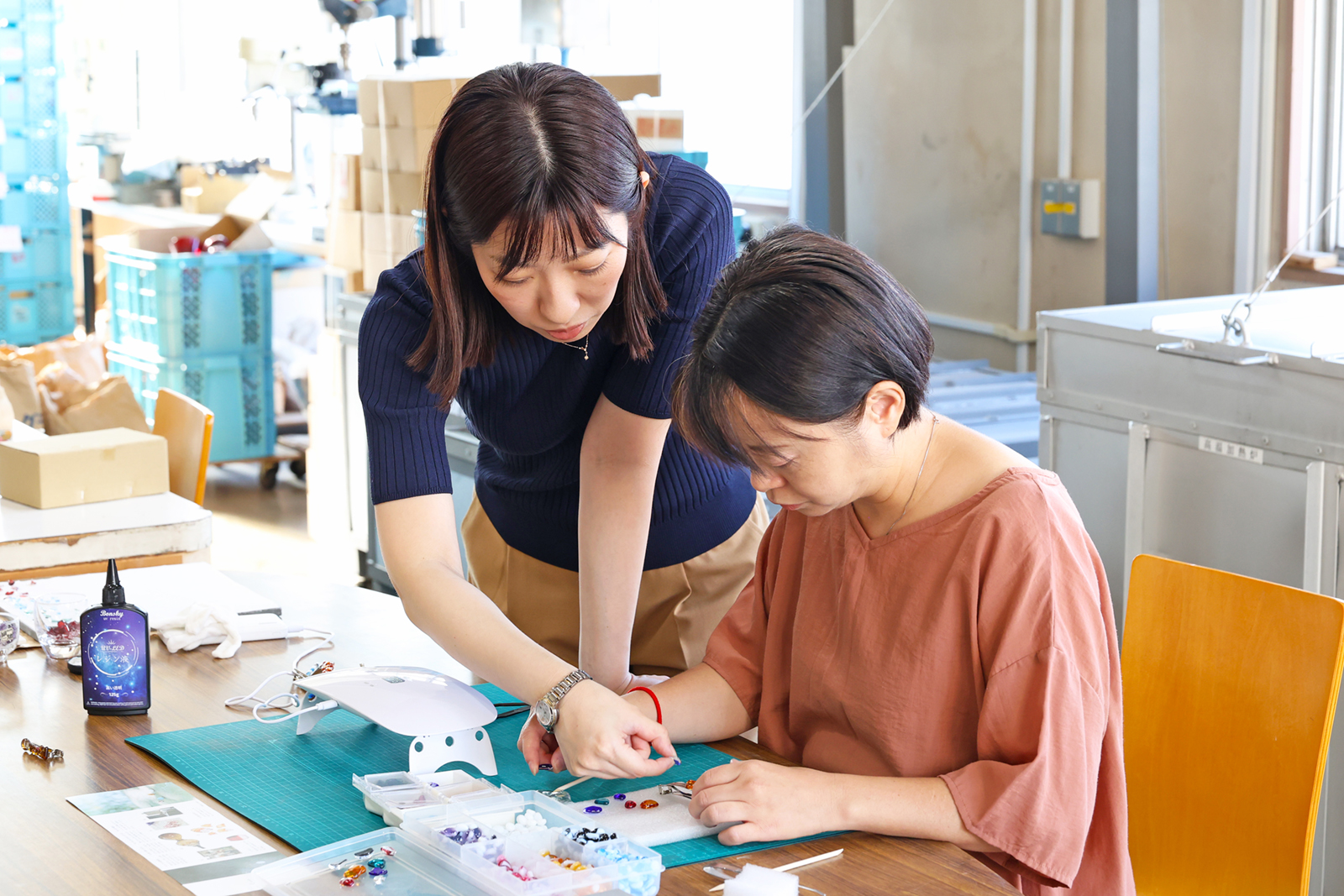
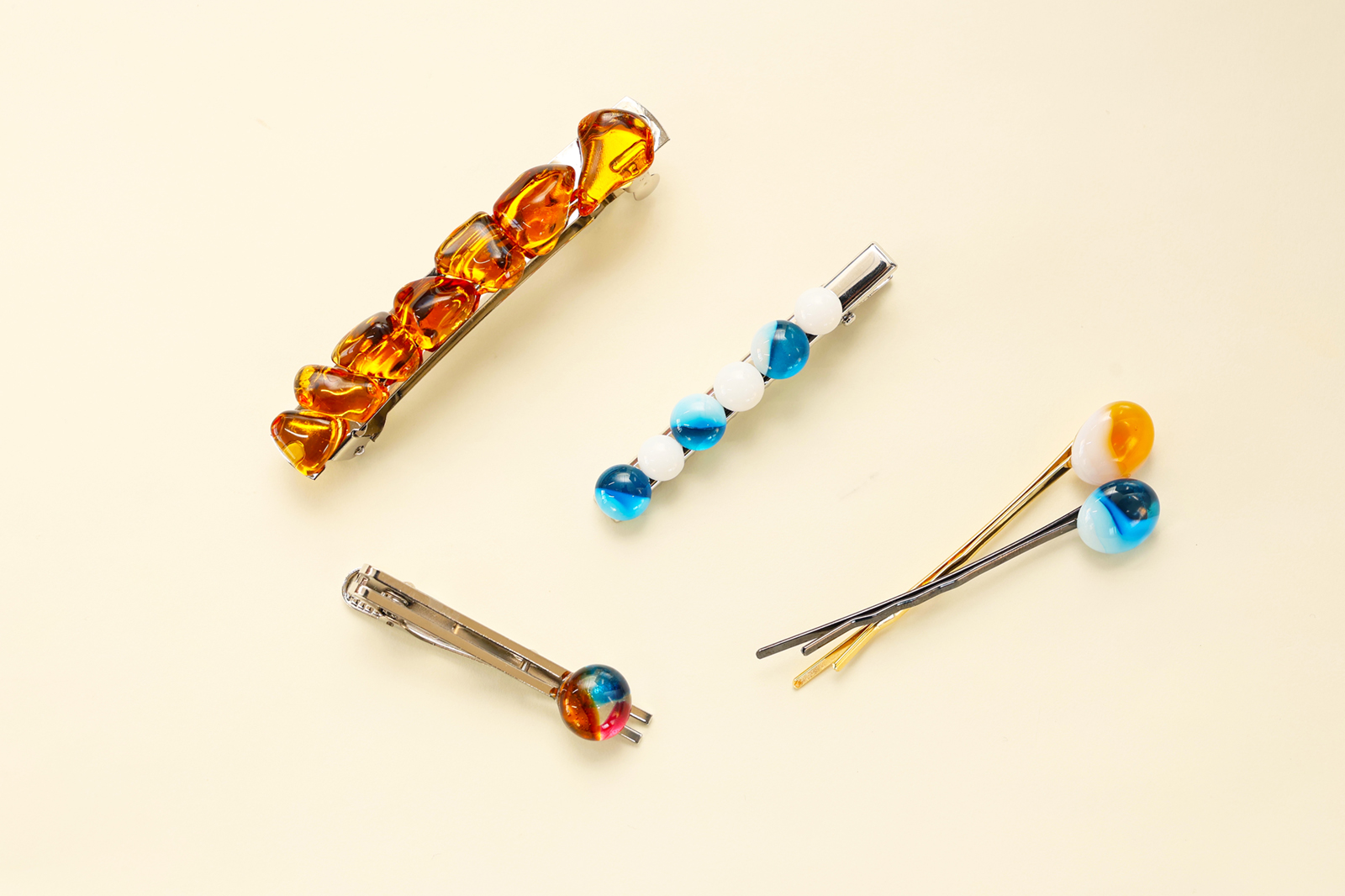
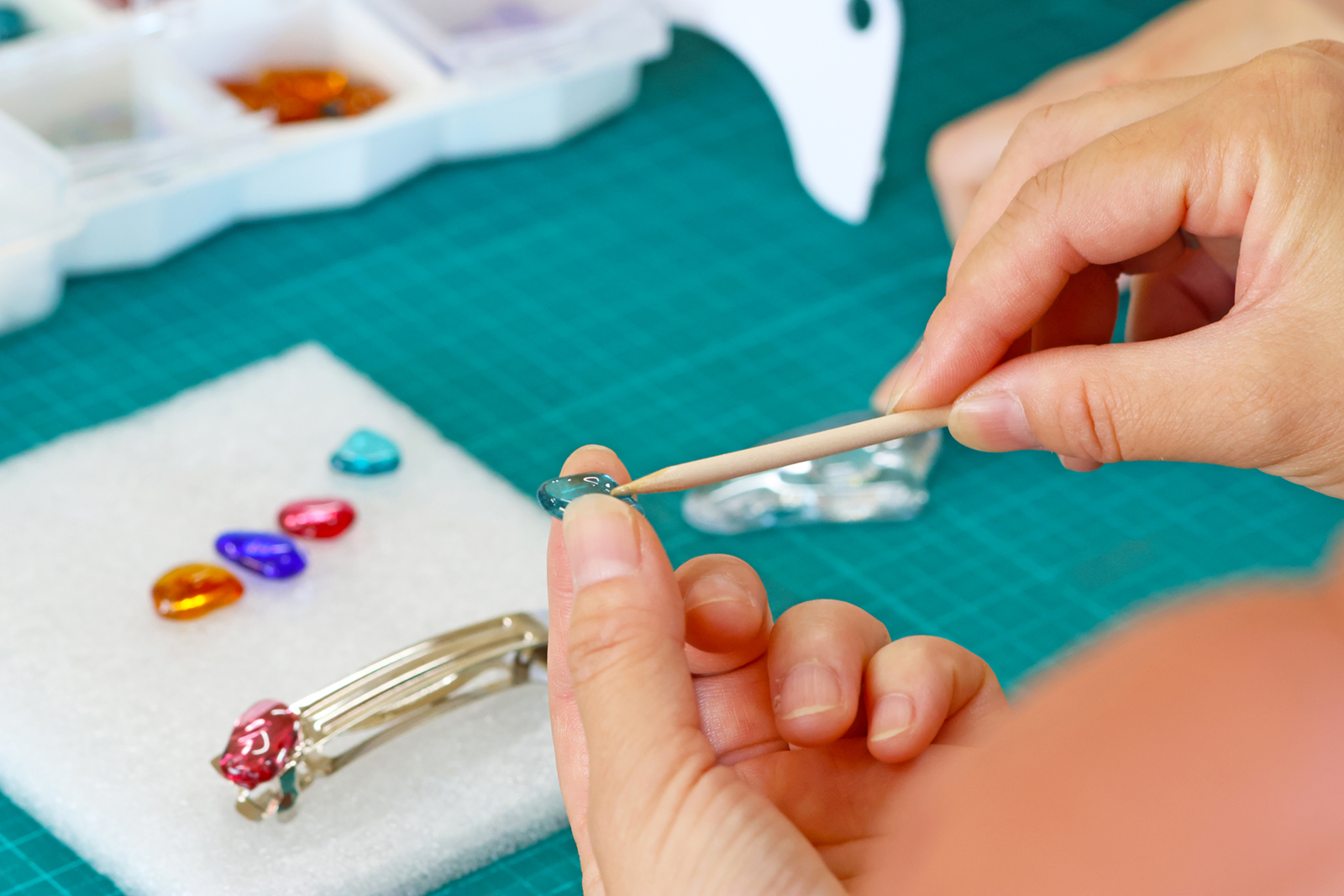
Next, it’s time to try your hand at crafting an accessory using recycled glass. First, select an accessory base from a choice of four types, including hair pins (a barrette, hair clip, or bobby pin) and a necktie pin.
Place your recycled glass pieces with colors and shapes that you like onto the hair pin or necktie pin base you selected. The key is to not affix the pieces immediately. Instead, place the recycled glass on the base to get an idea of what your finished piece will look like. Once you've decided on the design, use a bamboo skewer to apply resin (adhesive resin) to the recycled glass pieces and attach them to the base. Once all the glass pieces are attached to the base, the accessory is complete.
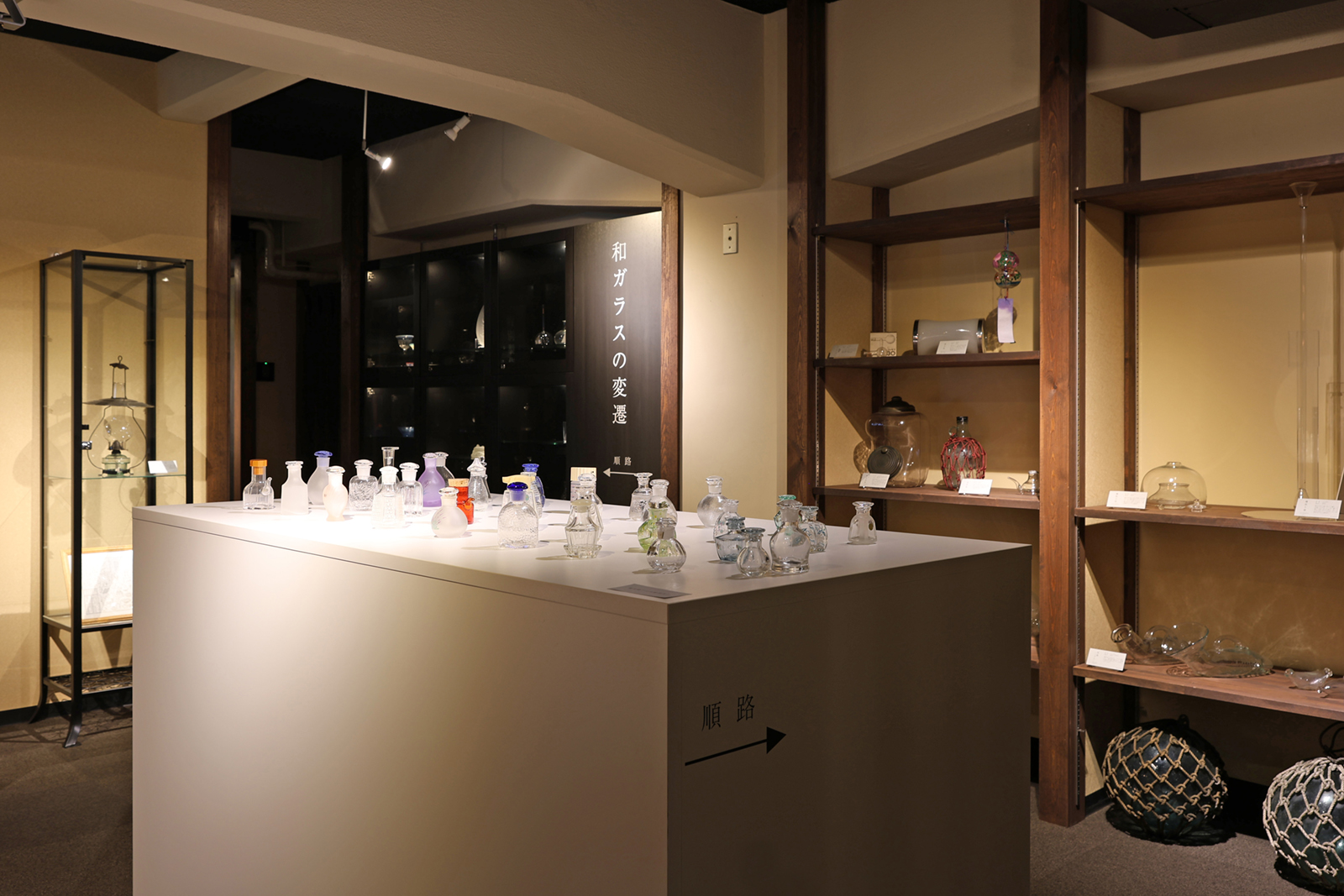
After the activity, we show you around the Edo glass museum annexed to the workshop. Take a quick guided tour led by Hirota Glass staff to fully experience the wonders of Edo glass. After experiencing the process of creating with Edo glass, you will feel an even greater sense of appreciation for the beauty this form of glassware that is imbued with the masterful techniques of its artisans.
Japanese beauty boosts up your daily life and turns it out something extraordinary
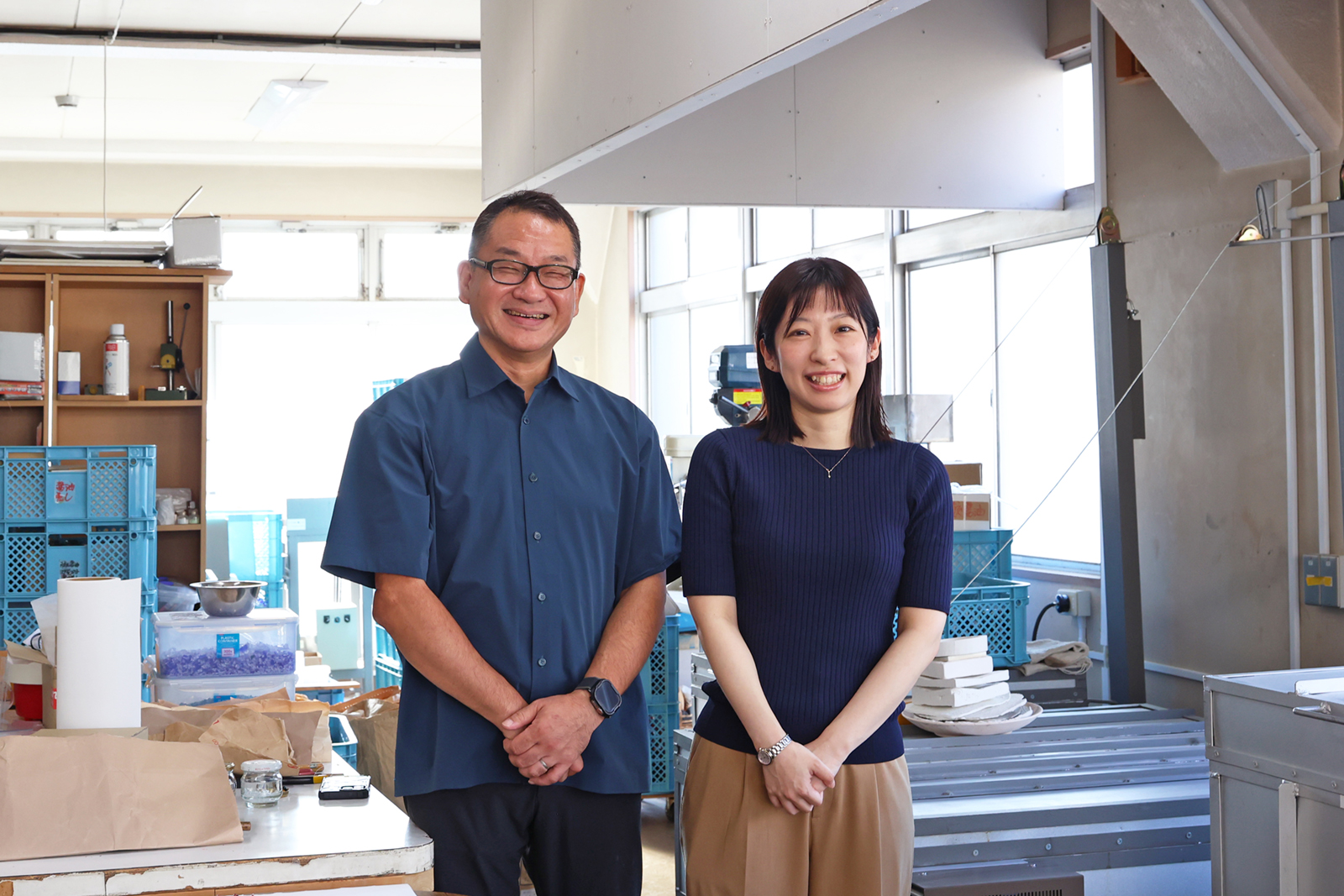
Edo glass is a rare traditional craft that elevates Western techniques through Japan's unique aesthetic sensibility. The unique designs rendered with delicate craftsmanship captivate not only the Japanese people, but people around the world. Mr. Tatsuaki Hirota, the fourth president of Hirota Glass Co., Ltd., states, “Because we produce products all in Japan, we would like to create items that embody Japanese culture.”
Hairpins crafted from Edo glass are perfect for everyday wear and are also eye catchers at formal occasions and other elegant events. The necktie pin is an item that makes it convenient for men to display Edo glass. Incorporate a subtle sense of specialness into your everyday life by wearing Edo glass, imbued with the unique beauty of Japan.
A manufacturer founded in 1899 that produces and sells Edo glass. Based on valuable design samples passed down since its founding, it produces Edo Kiriko cut glasses and blown glasses. Inheriting traditional manufacturing methods that have been passed down through generations, Hirota Glass continues creating products that harmonize with interiors while adapting to the changing times.